Why Herbicide-Free Weed Control Actually Works
Many gardeners reach for herbicides because it feels like the fastest fix. But chemical weed killers address symptoms rather than causes, and repeated use can affect soil biology, nearby plants, and local water quality. The good news: mechanical, cultural, and preventive strategies - used consistently - can be just as effective over a full growing season.
The key insight is that weeds are opportunists. They fill bare soil, exploit poor growing conditions, and thrive where desirable plants are struggling. Shift those conditions in your favor, and the weed pressure drops substantially. This is not a one-time fix; it's an ongoing practice. But each intervention you make compounds on the last.
Not All 'Weeds' Are the Same Problem
Some plants labeled as weeds are actually beneficial - clover fixes nitrogen in the soil, and certain native 'volunteers' support pollinators. Before pulling every unfamiliar plant, consider whether it's doing harm or just growing uninvited. Context matters: a plant is a weed when it's competing with something you want, not simply because it arrived on its own. For more on how native plants function in a yard ecosystem, see our piece on native vs. ornamental plant trade-offs.
Best Practices for Keeping Weeds in Check
The following approaches are grounded in sound horticultural practice and work well for most home gardens and lawn edges. They're most effective when used in combination rather than in isolation.
Pull weeds before they set seed - without exception.
A single dandelion or pigweed plant can produce hundreds to thousands of seeds that remain viable in soil for years. Removing weeds at the flowering stage, before seeds mature, is the highest-leverage action you can take. It reduces next year's weed pressure rather than just managing this year's.
Apply a 2-3 inch layer of organic mulch over all bare soil in garden beds.
Mulch blocks sunlight from reaching the soil surface, which prevents the vast majority of annual weed seeds from germinating. It also retains soil moisture, moderates temperature, and breaks down into organic matter over time. Keeping beds mulched year-round is one of the most passive and effective weed-suppression tools available.
Minimize soil disturbance in established beds.
Weed seeds can lie dormant several inches deep in the soil for many years. Every time you dig, till, or cultivate, you bring a fresh batch of seeds to the surface where they receive the light and warmth needed to germinate. No-till or low-till gardening keeps those seeds buried and dormant.
Plant desirable plants densely to shade out weed competition.
Weeds need light to establish. A dense canopy of intentional plants - whether vegetables, perennials, or ground covers - cuts off that light at the soil level. Bare soil is an open invitation; covered soil is not.
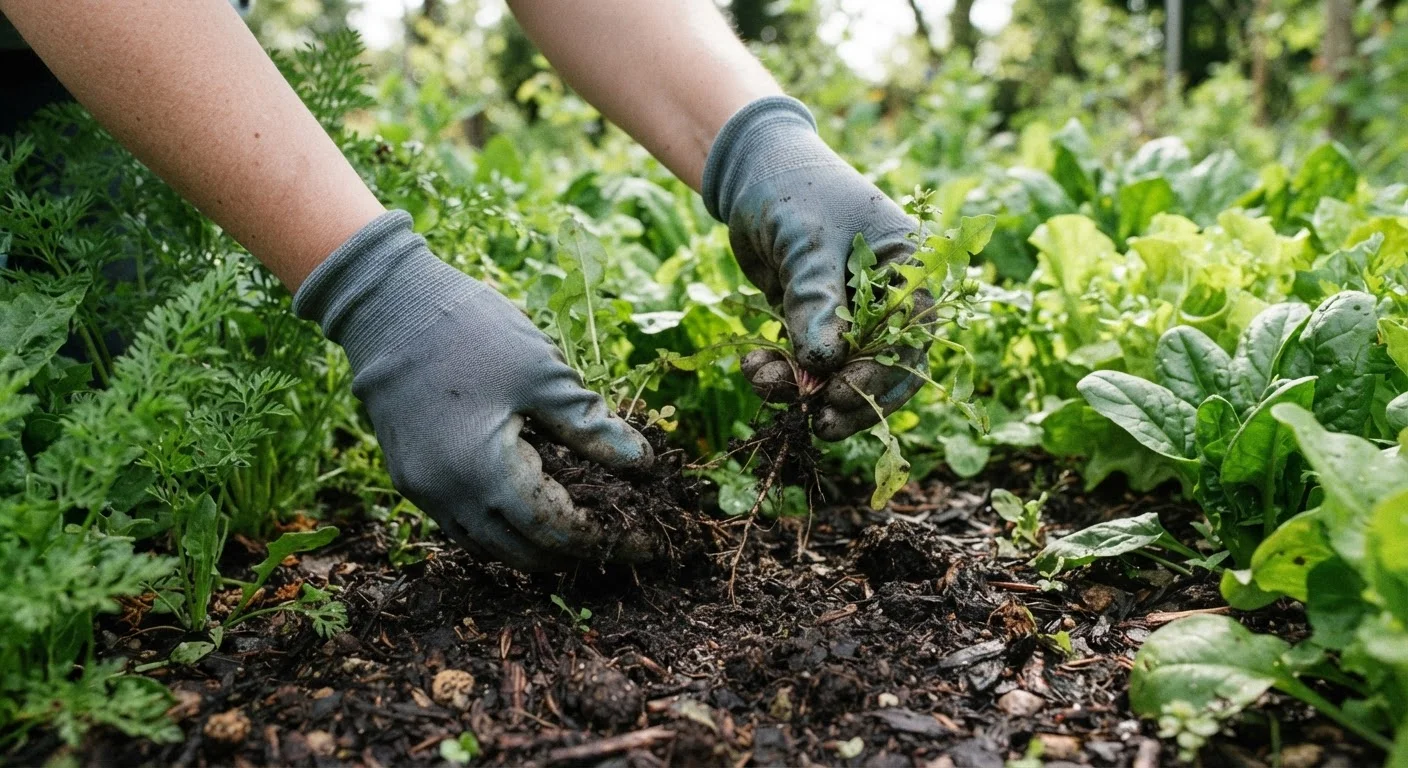
Hand-weed when soil is moist, not dry.
Pulling weeds from dry, compacted soil often breaks the plant at the crown, leaving the root system intact to regrow. Moist soil releases roots much more cleanly, giving you a better chance of full removal - including taproots and runners that will otherwise regenerate.
Use targeted solarization for heavily infested bare patches.
Soil solarization - covering bare soil with clear plastic for several weeks during the hottest part of summer - uses trapped solar heat to kill weed seeds and roots near the surface. It's a practical option before establishing a new bed in a weedy area, reducing the seed bank without chemicals.
Quick Wins You Can Do This Weekend
If you're starting from a weedy baseline, a few targeted actions this week will make a meaningful difference before you build out a longer-term system.
Putting It All Together
Effective weed management without herbicides comes down to stacking strategies. Cover bare soil with a properly applied layer of mulch, plant densely so weeds can't find a foothold, and remove the survivors while they're still small. In areas where turf keeps thinning out and weeds keep winning, consider whether a low-maintenance ground cover might simply be a better fit for those spots.
If you're planning a new bed, your setup choices matter too - raised beds offer meaningful advantages for weed control since you start with clean, uncontaminated soil. And don't overlook the fall: a strategic fall cleanup removes overwintering weed seeds and root systems before they get a head start next spring.
Consistency is what separates a manageable garden from an overwhelming one. Even 15 minutes a week of targeted hand-weeding during peak growing season can keep a typical garden bed under control.
95%+
Weed germination blocked by adequate mulch depth
Research from university extension programs consistently shows that a 3-inch organic mulch layer prevents the majority of annual weed seed germination by blocking light.
Decades
How long some weed seeds stay viable in soil
Studies on soil seed banks have found certain common weed species - including lamb's quarters and dock - can remain viable in undisturbed soil for 20 to 40 years.