How Free Apps Actually Make Money
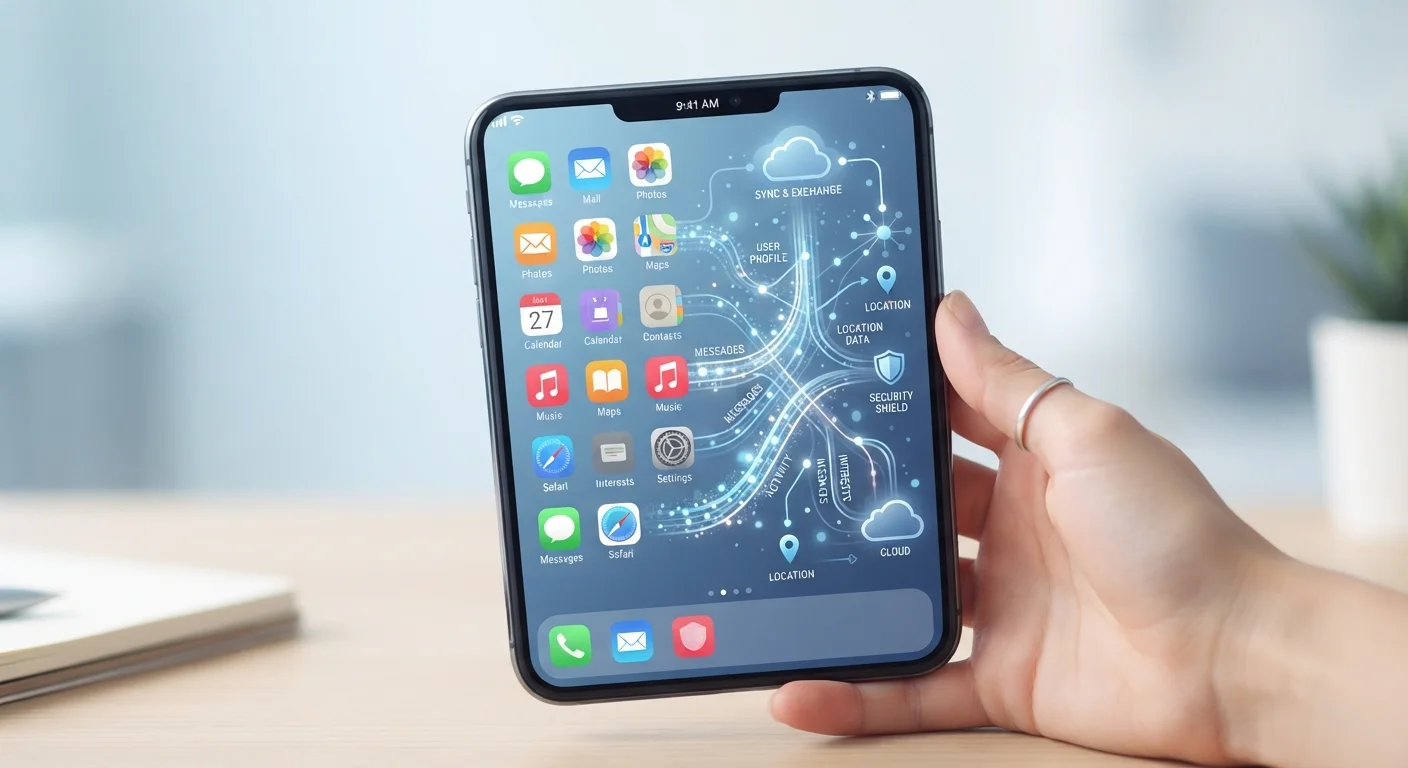
When an app carries a $0 price tag, something else is paying for the servers, engineers, and infrastructure behind it. In most cases, that something is your data - or more precisely, insights derived from your behavior that are sold to advertisers or other third parties.
The dominant model is called behavioral advertising: platforms collect data about what you click, search, watch, and where you go, then use that profile to show you targeted ads. Advertisers pay a premium to reach specific audiences, and the platform keeps the revenue. You receive the service at no direct monetary cost.
Some services also sell anonymized or aggregated data to market research firms, share it with partner companies, or use it to train internal AI systems. The specifics vary widely and are detailed - often in dense language - in each app's privacy policy. For a deeper look at what kinds of data flow out of everyday apps, see Your Personal Data Footprint.
Accessible to users regardless of income level
Free apps lower the barrier to essential tools - navigation, communication, productivity - for people who might not pay for premium software. This democratization of technology has real, tangible benefits for everyday users.
Broad range of high-quality services available
Many of the most capable tools for email, cloud storage, and social connection are free. In some categories, the free version is functionally comparable to paid alternatives.
No upfront financial commitment required
Users can try services without financial risk, making it easier to explore tools and discontinue ones that don't add value without losing money.
Personalized experiences can add convenience
Data-driven personalization can surface relevant content, faster search results, and useful recommendations - a tangible benefit that some users genuinely value.
What You Actually Give Up
The breadth of data collected often surprises people who look into it carefully. It's rarely just your email address.
Common data points collected by free apps include:
- Location data - often tracked continuously, even when the app is in the background
- Browsing and in-app behavior - what you tap, how long you linger, what you search
- Device identifiers - unique codes tied to your phone that allow cross-app tracking
- Contact lists and social graphs - some apps request access to your contacts to map relationships
- Purchase history - especially in retail, banking, and e-commerce-adjacent apps
Individual data points may seem minor in isolation. Combined over time, they can produce a surprisingly detailed behavioral profile. To understand more about the permissions apps request upfront, Understanding App Permissions walks through what each access request actually means.
Behavioral data is collected extensively and continuously
Free apps frequently collect location, search history, and in-app behavior on an ongoing basis. This data builds detailed profiles that persist well beyond a single session.
Data may be shared with third parties you don't know
Privacy policies often permit sharing data with advertising networks, analytics firms, and business partners. Users typically have limited visibility into who specifically receives their data.
Privacy controls are often buried or opt-out by default
Many platforms set the most permissive data-sharing options as the default, placing the burden on users to seek out and change settings they may not know exist.
Data collected today can affect you in unexpected future ways
Data profiles assembled now may be used in future contexts - insurance assessments, employment background checks, or credit decisions - in ways that are difficult to anticipate or contest.
Terms can change without clear notification
Privacy policies are legally subject to change, and while platforms are required to notify users, those notices are easy to overlook. What you agreed to originally may not reflect current practice.
Where You Still Have Control
The data exchange isn't entirely out of your hands. Both iOS and Android have expanded privacy controls in recent years, and using them consistently makes a real difference.
Privacy Settings Vary by Platform
The controls available to you depend on your device's operating system and the specific app. iOS and Android both offer system-level privacy dashboards, but individual apps may have additional settings inside the app itself. Checking both locations gives a more complete picture. Some settings reduce targeted advertising without stopping data collection entirely - the distinction matters.
Practical steps that can reduce data exposure without abandoning free services:
- Review app permissions regularly. Go to your phone's settings and audit which apps have access to your location, microphone, camera, and contacts. Revoke anything that seems unnecessary for the app's core function.
- Opt out of ad personalization. Most platforms offer a setting to limit personalized advertising, though this doesn't stop data collection entirely - it typically means ads become less targeted rather than absent.
- Read privacy labels. App stores now display privacy nutrition labels summarizing what data an app collects. These aren't exhaustive, but they offer a useful at-a-glance comparison.
- Consider paid tiers for sensitive categories. For apps handling health, finance, or communications, a paid plan with a clear no-data-sale policy may be worth the cost.
Smart home devices raise similar questions. Smart Speakers and Privacy covers how voice assistants handle recordings and what settings provide more control.
79%
Americans concerned about company data use
According to Pew Research Center survey data, roughly 79% of U.S. adults say they are concerned about how companies use the data collected about them.
~52%
Users who rarely read privacy policies
Pew Research findings indicate that a majority of Americans say they never or only sometimes read privacy policies before agreeing to them.
Weighing the Trade-Off for Yourself
There's no universally right answer to how much privacy is worth giving up for a free service. The calculation depends on what data an app collects, how sensitive that data is, and what value the service genuinely provides you.
A mapping app that uses your location to give accurate directions is a different kind of exchange than a game that tracks your contacts and purchase habits to sell advertising profiles. Treating these as the same trade-off understates the real variation in risk and benefit.
Some questions worth asking before downloading or continuing to use a free service:
- Does this app need the permissions it's requesting to do its core job?
- Would I still use this if I had to pay a modest monthly fee instead?
- Is there a privacy-focused alternative that offers comparable functionality?
Making deliberate choices across a handful of high-use apps - rather than trying to audit everything at once - tends to be more sustainable. If cost is a factor in those decisions, The Trade-Offs of a Very Tight Budget offers a broader framework for thinking through financial trade-offs.