How Smart Speakers Actually Listen
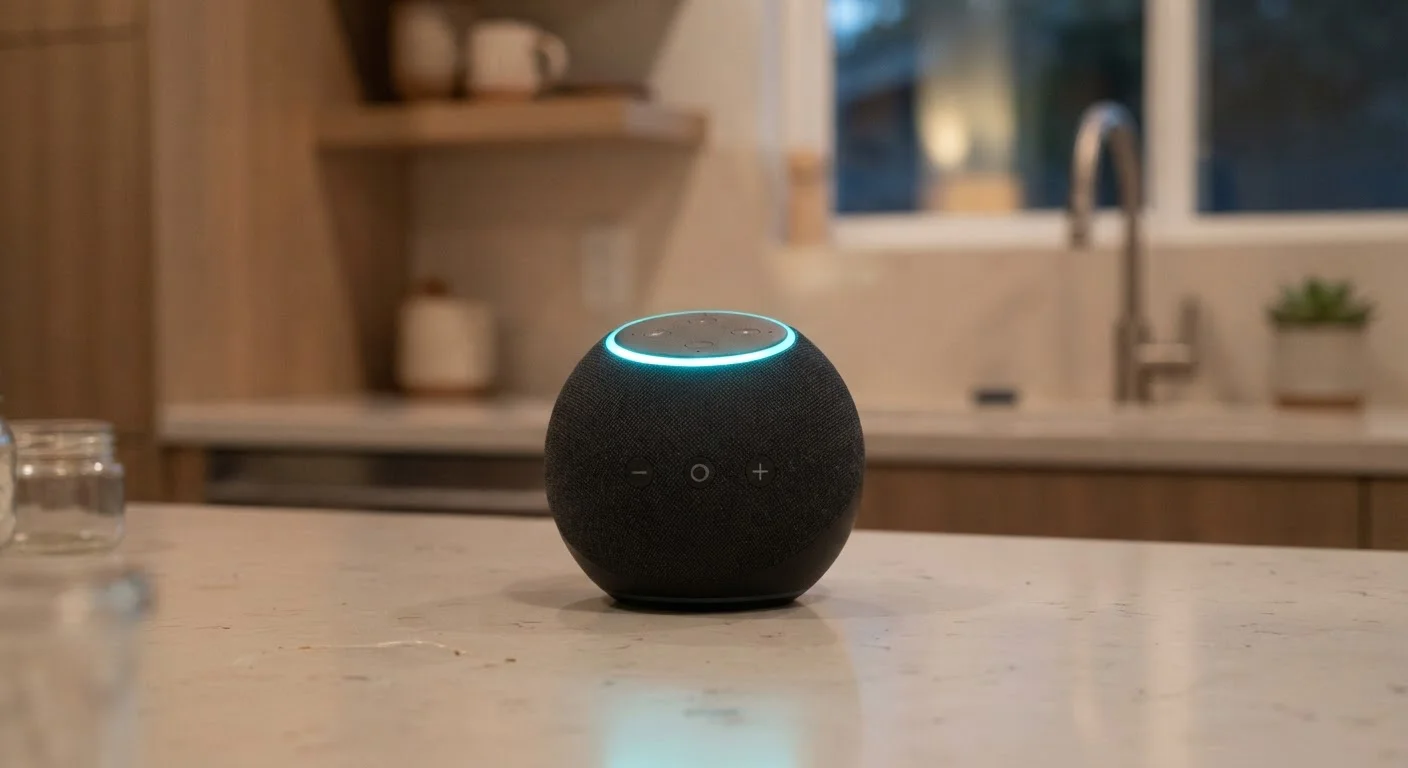
Smart speakers - devices like those powered by Amazon Alexa, Google Assistant, or Apple Siri - use a small, always-on microphone to detect a specific wake word (a short phrase like "Hey Google" or "Alexa"). Only after that trigger is detected does the device begin capturing and sending audio to the manufacturer's servers for processing.
The distinction matters: the device is not streaming continuous audio to the cloud. Before the wake word fires, audio is processed locally, on the device itself, and not transmitted or stored. This architecture is a deliberate design choice aimed at balancing responsiveness with bandwidth and privacy concerns.
That said, the system isn't perfect. Wake-word detection relies on pattern-matching algorithms, which means similar-sounding words or phrases can trigger an unintended recording. These false activations are a documented reality acknowledged by all major manufacturers.
For a broader look at how your data travels across devices and services, see your personal data footprint.
Common Myths - and What the Evidence Actually Shows
Misconceptions about smart speaker surveillance are widespread and understandable - the idea of a microphone in your home raises legitimate questions. The myth-fact pairs below address the most common ones with accurate, grounded corrections.
Myth
My smart speaker is always recording everything I say and sending it to the company.
Fact
Smart speakers only record and transmit audio after detecting the wake word - not continuously.
Independent network traffic analyses have consistently shown that smart speakers do not stream continuous audio to manufacturer servers. Audio is processed locally until the wake word is matched. The moment after a valid wake word is detected, a short clip is captured and sent for processing. While false activations can occasionally capture unintended audio, this is fundamentally different from always-on surveillance recording.
Myth
If I delete my voice history in the app, the recordings are gone for good.
Fact
Deletion through the companion app removes recordings from your accessible history, but residual data may persist in backups or logs depending on the platform's data retention policies.
Most platforms honor deletion requests promptly and in compliance with applicable privacy regulations, but their full data lifecycle - including server-side backups and derived data (like transcripts used in aggregate model training) - varies by provider and policy. Reading the privacy policy for your specific device gives the clearest picture of what deletion actually covers. When in doubt, combining deletion with opting out of data-sharing programs reduces your exposure.
Myth
Muting the microphone in the app is just as secure as the physical mute button.
Fact
A physical mute button cuts power to the microphone at the hardware level; a software mute relies on the device's software to enforce it.
Hardware mutes are generally considered more reliable from a security standpoint because they do not depend on software functioning correctly. A physical switch that disconnects the microphone circuit cannot be overridden by a software update or a bug. Software-level mutes are still useful and practical for everyday use, but users with heightened privacy concerns should favor the physical button when it's available.
Myth
Smart speakers are constantly targeted by hackers who can secretly activate them remotely.
Fact
Remote hijacking of mainstream smart speakers is not a common real-world threat, though certain documented attack techniques have been studied in research settings.
Security researchers have demonstrated techniques - such as ultrasonic or laser-based attacks - that can theoretically trigger wake words. However, these methods require specialized equipment and close physical proximity in most documented cases, making them impractical for typical remote attacks. Keeping device firmware updated is the most effective protection against known vulnerabilities, as manufacturers patch discovered issues through automatic updates.
Myth
Conversations between household members that never include the wake word are recorded.
Fact
Without wake-word detection, audio is not transmitted to manufacturer servers - ambient conversation alone does not trigger recording.
The on-device processor continuously listens for the acoustic pattern of the wake word. Until that pattern is matched with sufficient confidence, no audio is sent outward. Background conversations, television audio, and ambient noise are processed and discarded locally. This is also why false activations tend to involve words or phrases phonetically similar to the wake word - the system is only looking for that specific pattern.
Settings That Put You in Control
Most major smart speaker platforms provide settings that let you limit data retention, mute the microphone hardware, or delete your voice history. These controls are typically found in the companion smartphone app for each device.
- Microphone mute button: A physical switch or button that cuts power to the microphone entirely - when engaged, the device cannot hear anything, including the wake word. This is a hardware-level control, not a software one.
- Voice history review and deletion: Companion apps from major platforms allow you to listen to, review, and permanently delete stored voice recordings - individually or in bulk.
- Auto-delete settings: Many platforms offer options to automatically delete recordings older than 3 months or 18 months, reducing long-term data accumulation.
- Opt out of human review: Manufacturers have historically used small teams to review voice clips to improve accuracy. Most now allow users to opt out of this program within privacy settings.
Understanding these settings is part of a wider set of digital privacy habits worth building. The Digital Privacy Starter Guide is a practical starting point for everyday users new to these concepts.
Guest and Shared Household Considerations
If you have guests, children, or housemates, their voices may also be captured after false activations or intentional commands. Voice profiles and personalization features may allow the device to associate commands with a specific registered user, but not all platforms differentiate between household members by default. Review your platform's household and guest settings to understand how shared use affects data collection.
App permissions on your smartphone also interact with smart speaker ecosystems - particularly when companion apps request microphone or location access. For guidance on evaluating those requests, see understanding app permissions.
What Data Is Retained and Why
When a smart speaker successfully detects the wake word and processes a command, the audio clip and a text transcript of the query are typically sent to and stored on the manufacturer's servers. This data is used to fulfill the request, improve voice recognition accuracy, and personalize responses over time.
How long it's retained depends on the platform's default settings and any changes you've made. Without any customization, some platforms retain recordings indefinitely. Data may also be used to inform advertising profiles in ecosystems where the manufacturer also operates an ad business - a dynamic explored in more depth in our piece on privacy trade-offs in free services.
~1.5 sec
Audio captured before wake word in buffer
Most smart speaker designs capture a short pre-wake-word audio buffer (typically around 1-2 seconds) to ensure the full trigger phrase is included in the transmitted clip.
Multiple per day
Average false activations per device
Research published by Northeastern University found that smart speakers can be falsely activated multiple times daily depending on household environment and speech patterns.
No smart speaker platform currently transmits continuous audio streams from your home to external servers - that claim is not supported by independent network traffic analysis or manufacturer disclosures. However, the data that is collected after wake-word activation is real, stored, and worth managing intentionally.