Why Attackers Target People Instead of Systems
Modern software is harder to break into than ever. Encryption, firewalls, and automatic security updates have raised the technical bar for attackers significantly. So many criminals have shifted focus to the one element that remains reliably predictable: human behavior.
Social engineering works because it doesn't require cracking a password - it asks someone to hand it over willingly. By posing as a trusted authority, a helpful colleague, or an urgent notice from a recognizable institution, an attacker can bypass even sophisticated technical defenses in seconds.
This is why understanding social engineering matters for everyone, not just IT professionals. As the common myths about online security article explains, many people assume their devices or antivirus software will catch threats automatically - but no tool can reliably detect manipulation.
74%
Of data breaches involving a human element
According to Verizon's 2023 Data Breach Investigations Report, nearly three-quarters of all breaches involve some form of human action, including social engineering.
3.4B
Phishing emails sent daily worldwide
Security researchers estimate that over 3 billion spoofed emails are sent each day globally, making phishing one of the most prevalent cyber threats.
$2,500
Average loss per phishing victim in the U.S.
The FBI's Internet Crime Complaint Center (IC3) reports that phishing-related fraud consistently results in significant individual financial losses each year.
The Most Common Social Engineering Tactics
Attackers use a range of techniques, but most rely on a few proven psychological levers:
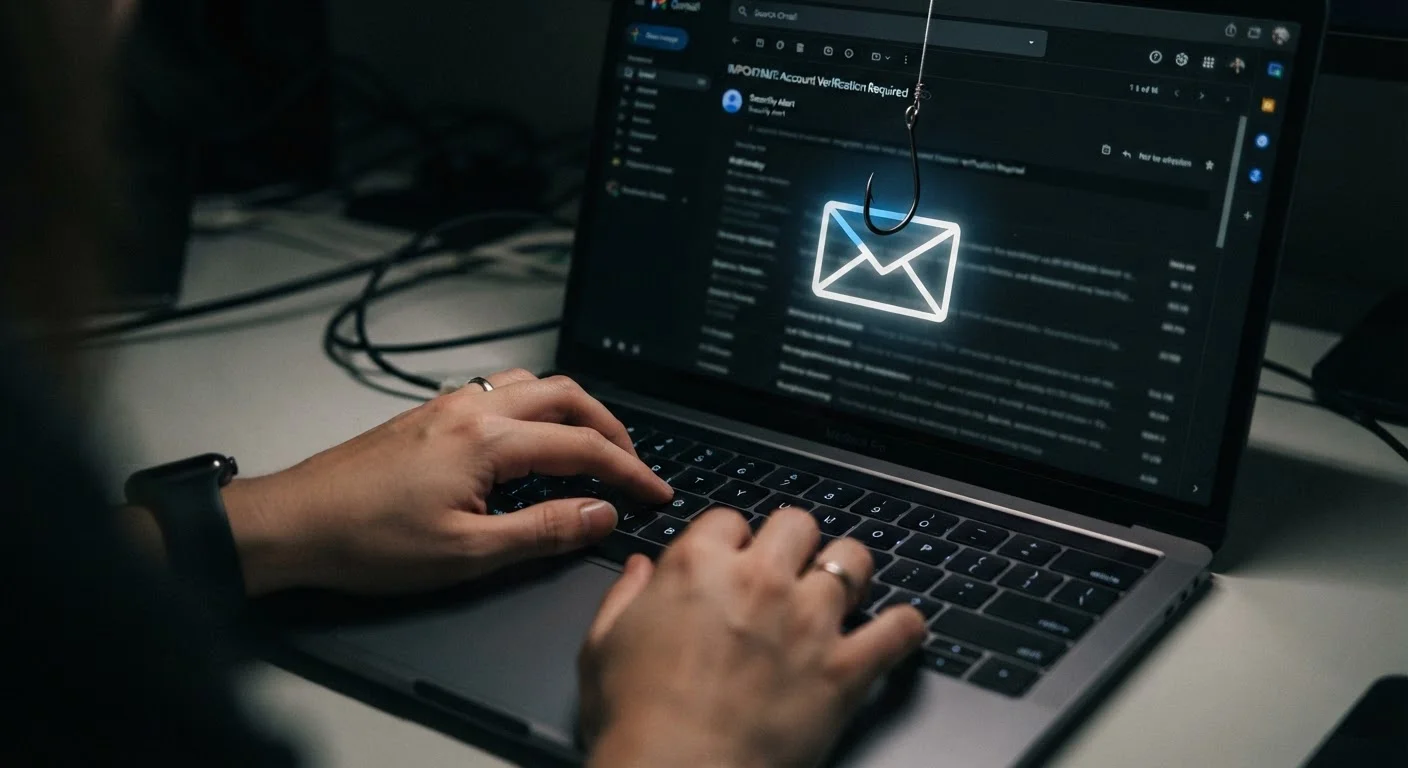
- Phishing: Fraudulent emails, texts, or websites that impersonate trusted entities - banks, delivery services, even government agencies - to steal login credentials or payment information.
- Vishing (voice phishing): Phone calls from someone claiming to be tech support, the IRS, or your bank, pressuring you to confirm account details or install remote-access software.
- Pretexting: The attacker fabricates an elaborate backstory - posing as a coworker, an auditor, or a vendor - to build enough trust to extract sensitive data.
- Baiting: Leaving infected USB drives in public places, or offering free downloads that contain malware, hoping curiosity will do the rest.
- Tailgating: Physically following an authorized person through a secured door, exploiting social politeness to gain unauthorized access.
The common thread across all of these is manufactured trust. Attackers research targets - often using publicly available social media information - to make their approach feel credible and personal.
The Psychological Triggers Attackers Exploit
Effective social engineering doesn't just mimic trusted sources - it manipulates emotional states that impair careful thinking. The two most commonly weaponized emotions are urgency and authority.
A message saying "Your account will be suspended in 24 hours" creates panic that short-circuits skepticism. A caller who introduces themselves as a federal agent or a senior executive from your company triggers deference to authority. Attackers may also exploit fear ("we've detected suspicious activity on your account"), reciprocity (offering something for free before making a request), or simple helpfulness - most people are conditioned to want to assist others.
“The weakest link in the security chain is the human element. Social engineering attacks succeed not because of technical sophistication, but because they exploit the fundamentally human tendency to trust.”
— Kevin Mitnick, Security consultant and author of 'The Art of Deception', widely cited authority on social engineering
Recognizing these triggers in real time is the most powerful skill a person can develop. For families with children online, these same dynamics apply - see what parents should understand about digital risks for age-appropriate guidance.
Practical Steps to Protect Yourself
You don't need to be a cybersecurity expert to defend against social engineering. The most effective habits are behavioral, not technical:
- Pause before acting. Urgency is a manipulation tool. Taking even 30 seconds to question a request disrupts the attacker's script.
- Verify independently. If a message claims to be from your bank, call the number on the back of your card - not the one in the message.
- Limit your public footprint. Attackers gather information from social media profiles to personalize attacks. Reviewing your privacy settings reduces their ammunition. Our digital privacy starter guide walks through the basics.
- Enable multi-factor authentication (MFA). Even if a password is compromised, MFA - which requires a second verification step like a code sent to your phone - can stop unauthorized access.
- Trust your instincts. If something feels slightly off about a message or call, it probably is. Legitimate organizations rarely pressure you to act instantly.
Stronger home network security also reduces exposure. If your router's settings haven't been reviewed, securing your home Wi-Fi network is a practical next step.
One Rule That Catches Most Attacks
When a message creates strong urgency or strong emotion - fear, excitement, panic - treat that as a signal to slow down, not speed up. Attackers engineer those feelings deliberately. Legitimate organizations give you time to verify before acting.