
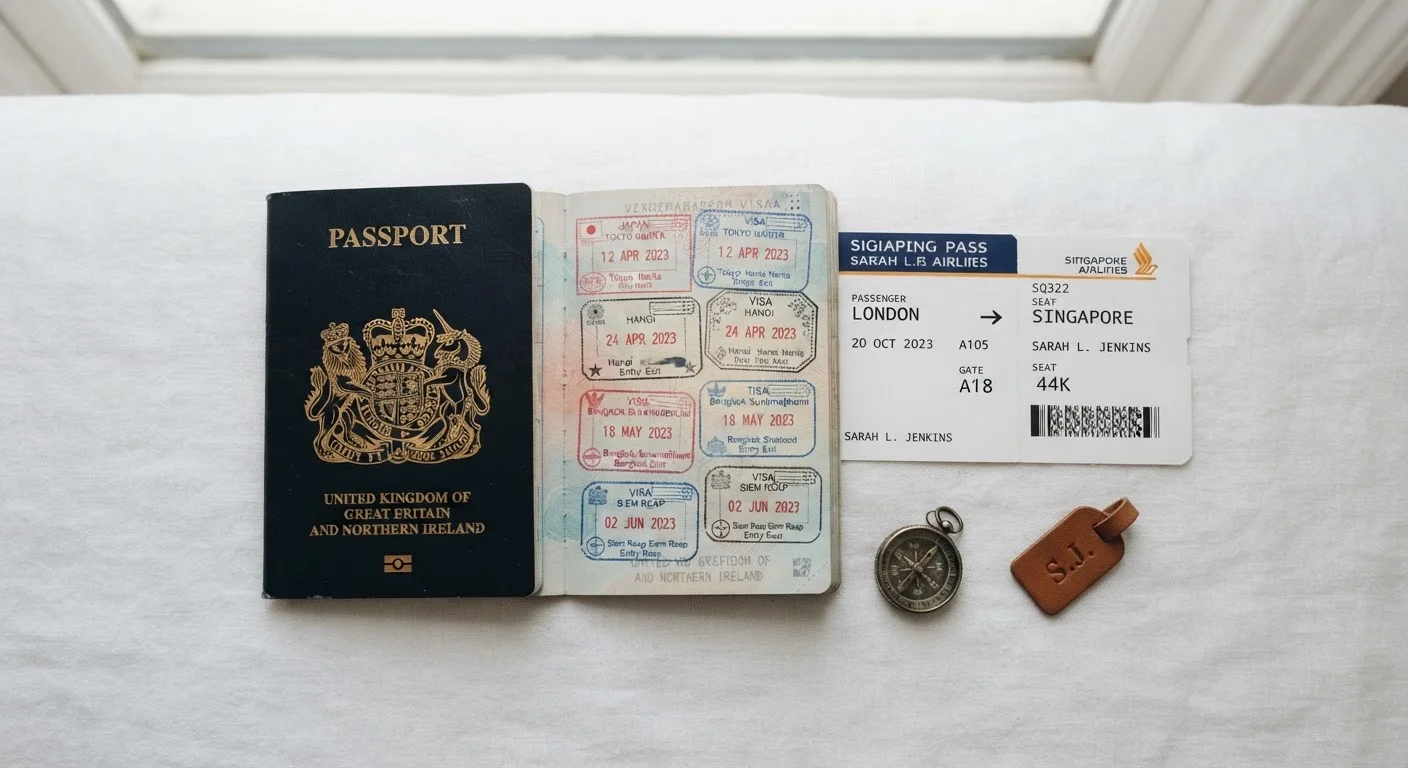
The Passport: Your Identity at the Border
Think of your passport as the foundation of all international travel. Issued by your home government, it confirms two essential things: who you are and where you're from. When a border officer looks at your passport, they're establishing identity and nationality before anything else happens.
For Americans, a U.S. passport is issued by the Department of State and is valid for ten years for adults (five years for children under 16). Crucially, a passport on its own doesn't guarantee you'll be allowed into a foreign country - it simply establishes your right to travel as a U.S. citizen and ensures you have a document to return home with. One detail many travelers overlook: most countries require your passport to remain valid for at least six months beyond your intended stay, so a passport expiring in three months may cause problems even if the trip is only for two weeks.
For a broader look at every document you might need for international trips, the Travel Documents Reference guide covers passports alongside visas, travel authorizations, and more.
The Visa: Permission to Enter
While your passport proves who you are, a visa is the destination country's way of saying, "Yes, you may come in - under these conditions." It's a separate authorization, issued by the foreign government, that specifies the purpose of your visit (tourism, business, study), how long you can stay, and in some cases which ports of entry you may use.
Visas come in several forms. A traditional visa is a physical stamp or sticker placed inside your passport by a consulate or embassy. Other countries use visas on arrival, issued at the border when you land. Increasingly common are electronic travel authorizations - such as Canada's eTA or Australia's ETA - which are approved digitally and linked to your passport without any physical stamp. The U.S. also operates the ESTA (Electronic System for Travel Authorization) for visitors from Visa Waiver Program countries.
Not every destination requires a visa for American travelers. Bilateral agreements between the U.S. and dozens of countries allow short-stay tourism without one. But "visa-free" is not the same as "entry guaranteed" - border officers can still deny admission based on other factors.
186
Countries accessible to U.S. passport holders
According to the Henley Passport Index, U.S. passport holders can access around 186 destinations visa-free or with visa-on-arrival - though this number fluctuates with bilateral agreements.
6 months
Minimum passport validity required by many countries
A widely applied rule among international destinations requires travelers' passports to remain valid for at least six months beyond the intended stay, regardless of visa status.
195+
Countries with unique entry requirements
Every sovereign nation sets its own entry rules; conditions vary by traveler nationality, purpose of visit, and current diplomatic relationships.
Entry Requirements: The Full Picture
Entry requirements are the umbrella category that contains both passport and visa rules - plus additional conditions a country may impose. These can include proof of a return or onward ticket, evidence of sufficient funds, travel insurance, hotel reservations, or health documentation such as vaccination records.
These requirements aren't static. They shift with political relations, public health situations, and security concerns. A country that was visa-free last year may have introduced a new authorization requirement. A health declaration that was mandatory during a global outbreak may have been lifted. This is why the traveler's job isn't just to gather documents once - it's to verify current requirements close to the departure date through authoritative sources like the U.S. State Department (travel.state.gov) or the destination country's official immigration authority.
Once you understand what documents get you to the border, it helps to know what happens there. The hidden friction points of crossing international borders - from biometric checks to customs declarations - are worth understanding before you land.
Verify Requirements Close to Departure
Entry rules can change with little warning due to diplomatic shifts, health policies, or security concerns. Make it a habit to re-check requirements from official sources - such as the U.S. State Department's travel portal or your destination's official immigration website - within 30 days of your trip, even if you researched them when booking.
Common Misunderstandings - and Why They Matter
One of the most frequent misconceptions is treating a visa as a guarantee of entry. It isn't. A visa is an invitation, not a contract. Border officers have the legal authority to deny admission even to travelers holding valid visas if something doesn't align - an inconsistent travel history, an insufficient explanation of purpose, or documentation that doesn't match what was declared during the visa application.
Another common mix-up: confusing the visa validity period with the permitted length of stay. A visa valid for one year doesn't mean you can stay for a year - it typically means you have up to one year to enter the country, after which you may only stay for the duration specified (often 30, 60, or 90 days per visit).
Understanding these distinctions is part of traveling smart. For a comprehensive resource covering timelines, health prep, money, and re-entry logistics, International Travel: A Complete Planning Reference is a useful companion for any international trip you're building.
Entry requirements, visa rules, and travel advisories can change. Always verify current information with official government sources - including your destination country's immigration authority and the U.S. State Department - before making travel decisions.