
The Psychology Behind the Overstuffed Bag
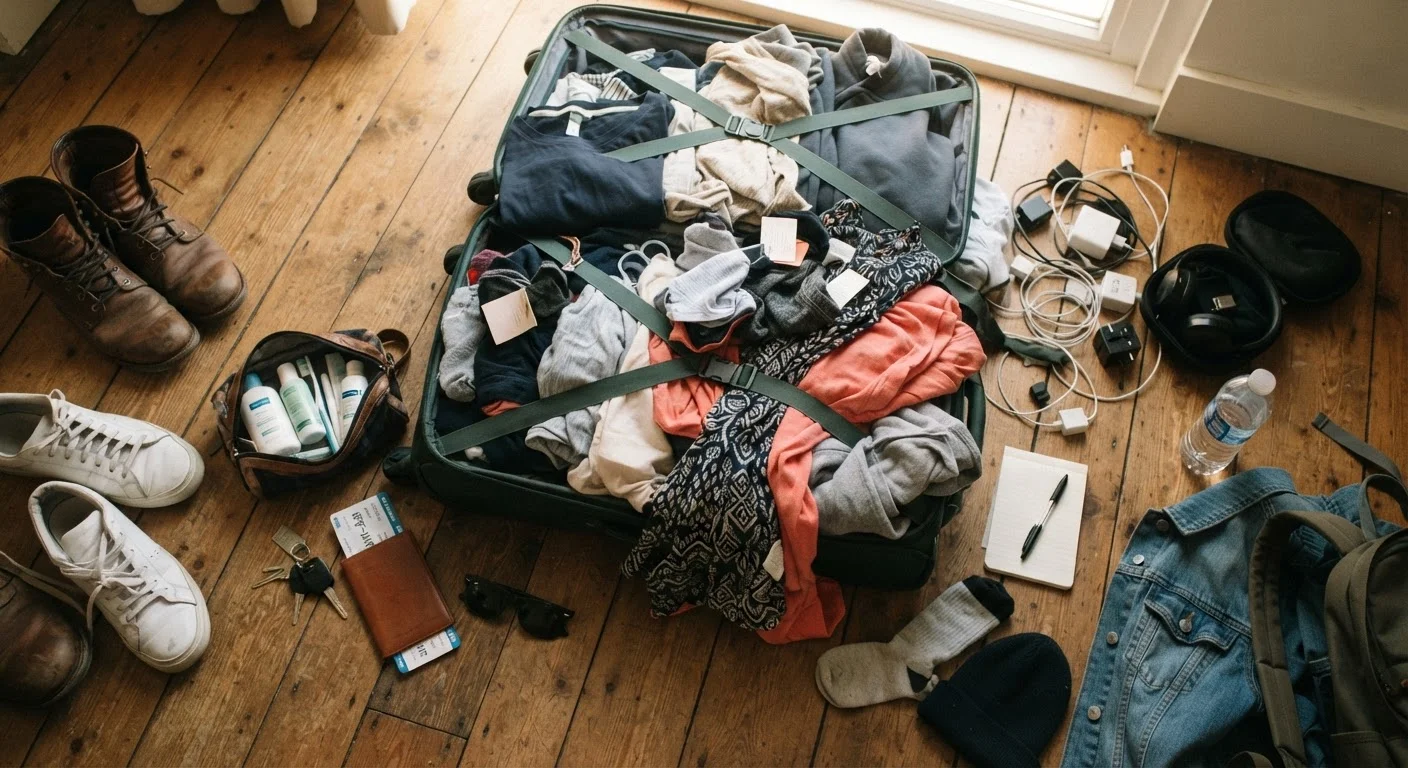
There's a moment almost every traveler knows: standing over an open suitcase the night before departure, trying to convince yourself that yes, you absolutely need four pairs of shoes for a five-day trip. Overpacking isn't a matter of poor math - it's a matter of anxiety. When we're uncertain about what a trip will demand, we pack for every possible scenario. The result is a bag that weighs twice what it should and contains half of what you'll actually use.
Travel uncertainty takes many forms. Will the weather turn cold? What if there's a nice dinner you didn't anticipate? What if you spill something and need a backup? These hypotheticals feel urgent at home but rarely materialize on the road. The irony is that the heavier your bag, the harder your trip becomes - dragging luggage through cobblestone streets, up hostel stairs, or across a busy train station is a tax you pay for every "what if" you packed.
Overpacking Can Derail More Than Your Back
Heavy luggage doesn't just cause physical strain - it can limit which transportation options you can realistically use, from metro systems and buses to small ferries and regional trains with limited storage. In some destinations, navigating with an oversized bag means defaulting to taxis or private transfers at a significant extra cost. Factor mobility into your packing decisions before you leave, not after you arrive.
Understanding why overpacking happens is the first step to stopping it. The second step is recognizing which specific items are almost always the culprits.
The Usual Suspects: What's Actually Weighing You Down
Across trip types and destinations, the same categories of items keep showing up in overloaded bags.
Packing shoes for every possible occasion, resulting in three to five pairs for a week-long trip.
Why it happens: Shoes feel like outfit anchors - we mentally build looks around them and convince ourselves each pair serves a distinct purpose.
Loading up on "just in case" clothing for scenarios that almost never occur.
Why it happens: Pre-trip anxiety about being underdressed or underprepared drives people to pack formal wear, rain gear, and cold-weather layers even when the forecast and itinerary don't justify them.
Bringing full-size toiletries or duplicating items already available at the destination.
Why it happens: Travelers buy travel-size containers with good intentions but then also throw in the full bottle "just to be safe," or forget that most hotels provide basic toiletries.
Packing electronics and cables for every device without editing down to what you'll realistically use.
Why it happens: We travel with habits from home - multiple devices, chargers, adapters, backup batteries - without asking whether each one will see actual use on the trip.
Filling dead space in the bag with "extras" - a fourth book, backup sunglasses, two umbrellas - that add weight without adding real value.
Why it happens: Once a bag is mostly packed, empty pockets and corners feel wasteful, so travelers fill them with low-priority items that seem light individually but accumulate quickly.
Once you can name the patterns, they become much easier to interrupt. The goal isn't to pack as little as possible for its own sake - it's to pack intentionally, so that everything in your bag earns its place. For a full planning framework that complements smart packing, the pre-trip checklist seasoned travelers swear by walks through a step-by-step process that includes packing review.
The Real Cost of Carrying Too Much
Overpacking isn't just physically uncomfortable - it has measurable financial consequences. Airlines charge checked baggage fees that can add up to hundreds of dollars on a round trip, especially on budget carriers or international itineraries. If your carry-on is overweight or oversized, you may be forced to check it at the gate, often at a premium rate. These are costs that never appear in an initial trip budget.
$75-$150
Typical round-trip checked bag fees on domestic US flights
Baggage fee structures vary widely by airline and fare class; budget carriers often charge more, and fees have increased across the industry in recent years.
~50%
Packed items most travelers report never using
Informal surveys and travel experts consistently find that roughly half of what travelers pack comes home untouched - a reliable benchmark for how much room exists to cut back.
Beyond fees, there's the cost in time and energy. A heavy bag slows you down in airports, limits your transportation options (good luck with a 28-inch roller on a packed metro), and adds fatigue to days that are already demanding. Travelers who pack light tend to move more freely, adapt more easily, and - by most accounts - enjoy their trips more. For a full picture of where travel money actually goes, including the costs that sneak up on you, see where your travel budget actually goes.
Practical Mindset Shifts That Lead to Lighter Luggage
The most effective packing advice isn't a list of items - it's a change in how you think about packing. A few reframes that experienced travelers rely on:
- Pack for the trip you're taking, not the trip you're imagining. Look at your actual itinerary: what are you really doing each day? Pack for those activities, not for hypothetical ones.
- Trust the destination. Most places you'll travel have pharmacies, laundromats, and stores. Forgetting something minor is rarely a crisis - it's a five-minute errand.
- Use the lay-it-out method. Spread everything on your bed before packing. Then put about a third of it back in the closet. You'll almost never miss what you left behind.
- Favor versatile over specialized. A neutral-colored shirt that works for both a hike and a casual dinner beats two single-purpose outfits every time.
If you're navigating the bigger question of whether to check a bag at all, the carry-on vs. checked luggage guide breaks down trade-offs by trip type and destination. And for international trips especially, the international travel prep checklist helps you confirm you have everything essential - without doubling up on what you don't need.