Why Night Driving Is Statistically Riskier
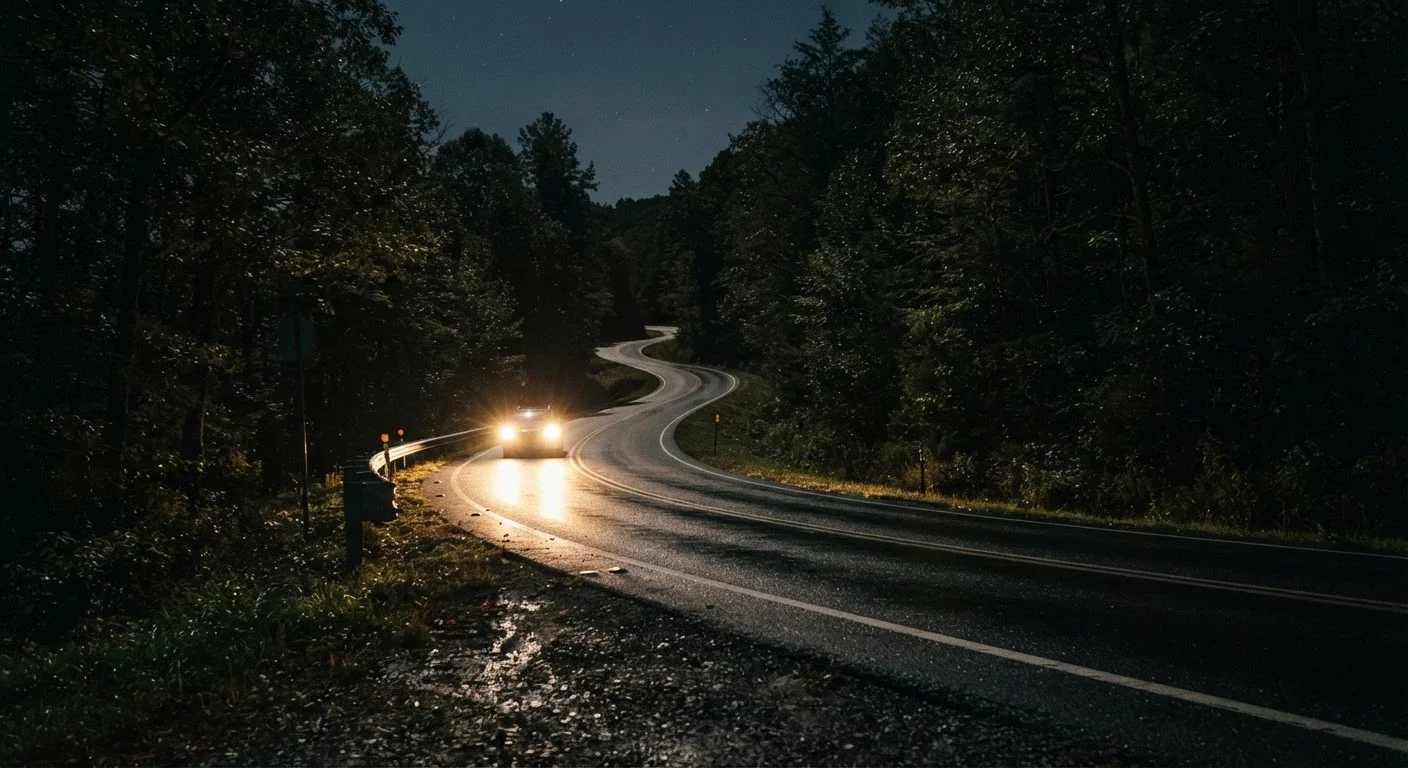
Despite accounting for a smaller share of total miles driven, nighttime hours produce a disproportionate number of fatal crashes. According to the National Safety Council, the fatal crash rate per mile driven is roughly three times higher at night than during the day. The reasons are compounded: reduced visibility shortens reaction windows, pedestrians and cyclists are far harder to detect, and fatigue reaches its biological peak in the late-night and early-morning hours.
Understanding those risk factors isn't about creating anxiety - it's the foundation for building habits that counteract them. As our guide on how safety risks differ between highway and city driving illustrates, different road environments demand different defensive strategies. Night driving is its own distinct environment that requires the same deliberate recalibration.
3×
Higher fatal crash rate at night vs. daytime
According to the National Safety Council, the fatal crash rate per mile driven is approximately three times greater during nighttime hours.
~160 ft
Typical low-beam headlight range
Standard low-beam headlights illuminate roughly 160 feet of road ahead, which is less than the stopping distance required at many highway speeds.
49%
Of fatal crashes occur at night or in low light
The NHTSA has reported that roughly half of all traffic fatalities occur in darkness or dawn/dusk conditions, despite those periods accounting for far less than half of driving time.
Best Practices Every Night Driver Should Follow
Experienced drivers don't simply hope conditions cooperate after dark - they actively adjust their behavior and vehicle setup to compensate for what the darkness takes away.
Use your headlights from dusk through dawn, not just in full darkness.
Many drivers underestimate how quickly visibility drops in twilight. Headlights at dusk make your vehicle visible to other drivers and pedestrians well before full darkness arrives, reducing side-impact and pedestrian collision risk.
Reduce your speed to match the limits of your headlight range.
Standard low-beam headlights typically illuminate about 160 feet ahead - yet at 60 mph, stopping distance can exceed 200 feet. Driving faster than your headlights can 'see' is called overdriving your headlights, and it leaves no room to stop if a hazard appears.
Clean your windshield inside and out before driving at night.
Interior film on windshields - from off-gassing plastics and vaping residue - scatters oncoming headlight glare dramatically. A clean windshield can reduce hazing and glare spread by a significant margin.
Look toward the right edge of the road when facing oncoming headlights.
Direct gaze at bright oncoming lights causes temporary night blindness that can last several seconds after the vehicle passes - long enough to miss a pedestrian or curve. Shifting gaze to the right edge line lets you track your lane without fixating on the glare source.
Increase your following distance to at least four seconds after dark.
Night conditions reduce your ability to read road surfaces, detect brake lights early, and judge vehicle speed accurately. Additional following distance gives you extra reaction and braking time that daylight habits often don't account for.
Ensure headlights and taillights are properly aimed and fully functional.
Misaligned headlights can cut effective illumination range significantly, or blind oncoming drivers and trigger unnecessary high-beam retaliation. Burned-out taillights make rear-end collisions more likely in low-visibility conditions.
Managing Fatigue Before It Manages You
Fatigue and darkness form a dangerous combination. The body's circadian rhythm naturally dips in the hours between midnight and 6 a.m., causing alertness to fall even in drivers who feel rested. Our dedicated resource on recognizing driver fatigue warning signs covers the early indicators in detail - but the core principle is this: by the time you feel obviously sleepy, your reaction time is already degraded.
Plan night trips to avoid driving through your natural sleep window when possible. If you must drive late, schedule brief rest stops every 90 to 120 minutes. Caffeine can provide short-term alertness, but it is not a substitute for rest on a multi-hour drive.
The 90-Minute Rule for Late-Night Drives
If your route extends beyond 90 minutes during late-night hours, build in a deliberate stop - even if you feel alert. Cognitive fatigue accumulates before subjective sleepiness sets in, meaning your reaction time may already be compromised before you feel tired. A 10-minute break with a short walk resets alertness far more reliably than willpower alone. For further guidance, see our article on driver fatigue warning signs.
Quick Actions You Can Take Tonight
Some night-driving improvements require nothing beyond changing behavior before you put the car in drive. Distracted driving amplifies every nighttime hazard - eliminating phone use and reducing in-cabin noise is a simple and immediate gain. Similarly, inattentional blindness - the brain's tendency to miss objects that should be visible - is worse under cognitive load, so keeping your mental focus squarely on the road matters more than ever after dark.