The Storage You Already Own
Before you consider adding shelving, building an addition, or renting a storage unit, it's worth doing a slow walk through your home with fresh eyes. Most American households have several pockets of genuinely usable space that go ignored - not because they're hard to reach, but because they've become invisible through habit.
This isn't about buying clever gadgets or overhauling your home. It's about recognizing what's already there. If you're new to thinking systematically about organization, our plain-language guide to common storage terms can help you get your bearings before diving in.
Below are seven hidden storage opportunities that are present in most homes - and practical ways to start using them.
The space under your bed
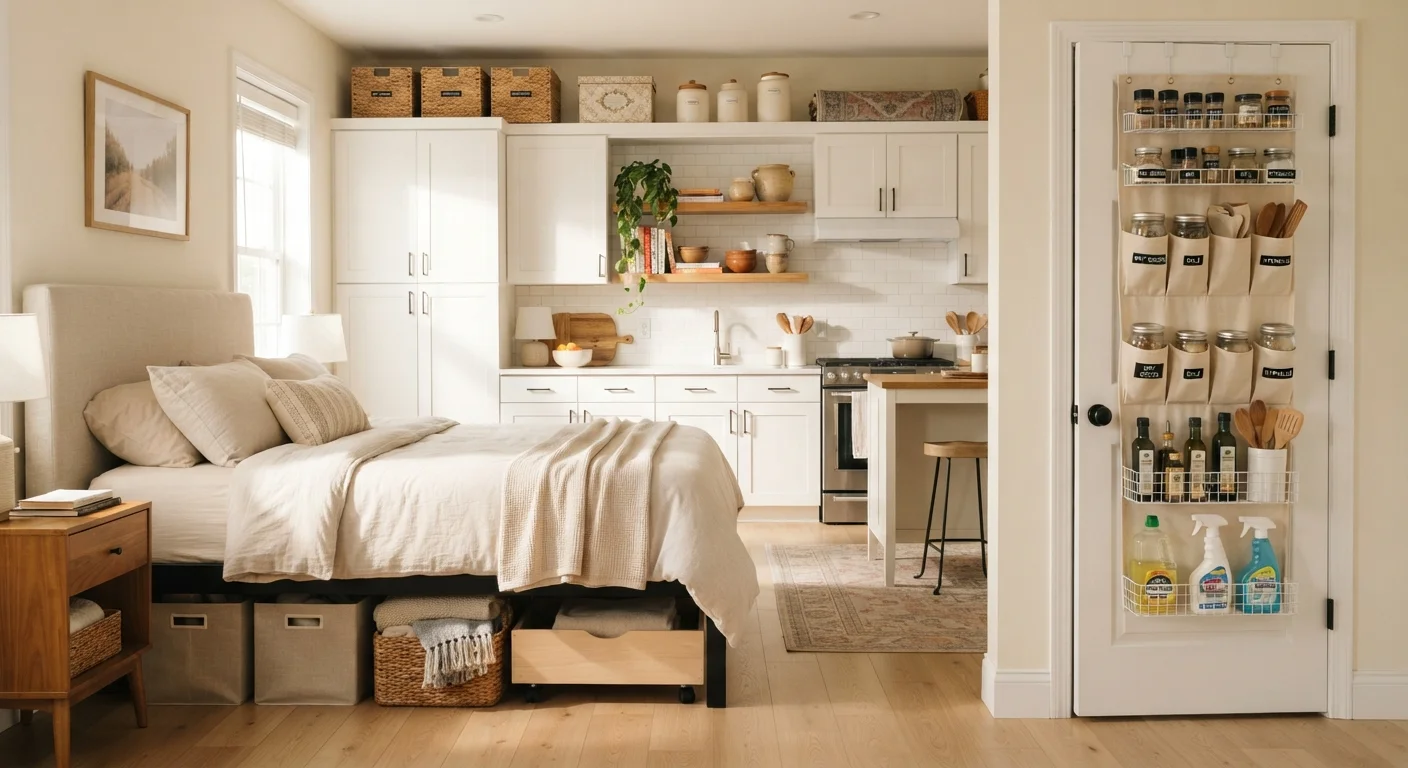
The area beneath a standard bed frame offers anywhere from 7 to 13 inches of clearance - enough to store flat bins, seasonal clothing, extra bedding, or shoes. Shallow, wheeled containers make retrieval easy, and vacuum-seal bags compress bulky items like comforters to a fraction of their normal size.
The main pitfall is out-of-sight, out-of-mind clutter. Stick to items you use seasonally rather than things you're genuinely unsure about keeping.
Under-bed space can hold seasonal clothing, shoes, and bedding without adding a single piece of furniture.
Above kitchen and bathroom cabinets
The gap between the tops of upper cabinets and the ceiling is one of the most consistently wasted areas in American homes. It's rarely less than 12 inches and is structurally stable enough for lightweight baskets or decorative bins. Use it for items you reach for only occasionally - holiday serving dishes, rarely used appliances, or overflow pantry goods.
Keep things in labeled containers rather than loose piles, since this area tends to collect dust and is harder to scan quickly.
The gap above kitchen cabinets is structurally sound and often deep enough for seasonal or overflow storage.
The back of cabinet and closet doors
Over-the-door organizers mount without tools in most cases and instantly multiply a door's utility. In a bathroom, the back of the cabinet door under the sink can hold cleaning supplies or hair accessories. Pantry doors work well for spices, snack bags, or foil and wrap boxes. Bedroom closet doors can support shoe pockets or accessory organizers.
Check the door clearance before purchasing any organizer - the door needs to swing freely once the organizer and its contents are in place.
Over-the-door organizers require no tools and effectively add a full shelf's worth of accessible space.
Dead corners in closets and rooms
Corners where two walls meet - particularly inside closets - are often left empty because standard shelving doesn't reach them. Rotating corner organizers, L-shaped shelf inserts, or simple lazy Susans (rotating trays that let you spin items into reach) can make these zones fully functional without custom carpentry.
In living spaces, a tall corner shelf unit can turn a blank corner into display and storage space without eating into the room's walking area. If you want a deeper look at how common organizing myths hold families back, that article tackles why many people assume a bigger home is the only solution.
Corner zones are consistently underused - the right rotating organizer can unlock them without any renovation.
Stair risers and under-stair space
Homes with staircases have a naturally formed storage cavity beneath them. Depending on your layout and access, this space can hold rolling bins, a small built-in bookcase, or even a compact workspace. If the area is enclosed with drywall, adding a door is a project that typically requires a permit and a licensed contractor - verify local building requirements before proceeding.
Even without major work, individual stair risers can sometimes be fitted with pull-out drawers if the staircase design allows. This is a project that benefits from a professional assessment first.
The cavity under a staircase is one of the largest untapped storage zones in a multi-story home.
Vertical wall space in the garage
Many garages store items on the floor by default, wasting the several hundred square feet of vertical wall space available. Pegboards, wall-mounted track systems, and ceiling-mounted overhead racks are all well-established solutions that move storage off the ground and free up floor space for vehicles or work. Our complete garage organization walkthrough covers how to approach this systematically.
When mounting anything to garage walls, anchor into studs (the vertical wooden framing inside the wall) for reliable weight support. Drywall anchors alone are not sufficient for heavy tools or equipment.
Garage walls can hold tools, bikes, and bins - leaving the floor clear for what actually belongs there.
Toe-kick space beneath base cabinets
The recessed area at the bottom of kitchen base cabinets - the toe-kick - is almost universally empty. Pull-out drawers designed for this space are available and can store flat items like baking sheets, cutting boards, or cleaning supplies. Installation varies in complexity depending on cabinet construction; some cabinets accept these drawers with minimal modification, while others may require more involved fitting.
This is a genuinely overlooked niche that most homeowners never think to use, making it a high-return discovery for kitchens short on drawer and cabinet space.
Toe-kick drawers under base cabinets offer flat, accessible storage that most homeowners never think to use.
Making It Work Long-Term
Discovering extra space is only half the job. The other half is making sure whatever you store there stays organized and accessible. A few principles help: group like items together, label containers you can't see through, and resist the urge to treat newly found space as a dumping ground for things you haven't decided about yet.
Start with One Zone at a Time
Trying to tackle every hidden storage area at once often leads to abandoned projects and more mess, not less. Pick one area - the space under your bed or the back of a closet door - and fully organize it before moving on. Small, completed wins build the momentum that makes the rest easier.
If you live in a smaller home or apartment, many of these same strategies scale down effectively. Our article on organizing a small apartment without sacrificing comfort explores how to apply these ideas when square footage is especially tight. And if you're weighing whether to store items higher up or spread them out at floor level, vertical versus horizontal storage is worth reading before you commit to a layout.
The goal isn't a perfectly staged home - it's a home where things have a place and getting to them doesn't take effort. That's achievable in most houses without a single renovation.