Why Storage Vocabulary Matters
Walk into any home organization conversation - with a professional organizer, a contractor, or a design-savvy friend - and you'll quickly encounter words like dead space, vertical storage, or zone system. Without a shared vocabulary, it's easy to misunderstand advice, underestimate a project, or simply not recognize the opportunity sitting right in front of you.
This glossary covers the terms that come up most often when planning, organizing, or rethinking storage in a typical American home. Whether you're tackling a cluttered closet or rethinking an entire room, these definitions will help you think - and act - more clearly. For a parallel reference on home improvement language, see our Home Improvement Glossary.
Dead Space
Areas in a home that exist structurally but are not being used for storage or any functional purpose. Common examples include the space under a staircase, above a refrigerator, or in the corners of a deep closet.
Zone Storage
An organizational method that groups related items together in a dedicated area based on activity or category. For example, keeping all cleaning supplies in one cabinet and all baking tools in one drawer creates distinct zones.
Vertical Storage
The practice of using wall height - rather than floor or counter space alone - to store items. Shelving stacked to the ceiling, wall-mounted racks, and over-door organizers are all forms of vertical storage.
Primary Storage
The most accessible storage locations in a room - typically at eye level or within easy reach. Items used daily or frequently should occupy primary storage spots.
Secondary Storage
Storage areas that are harder to access, such as high shelves, deep cabinets, or under-bed bins. Best reserved for seasonal items, backups, or anything used infrequently.
Decanting
The practice of transferring items from their original packaging into uniform bins, jars, or containers. This reduces visual clutter, makes quantities easier to see, and creates a more consistent look on shelves.
Modular Storage
Storage systems made of interchangeable, stackable, or reconfigurable components. Modular units can be expanded or rearranged as needs change without replacing the whole system.
Negative Space
In an organizational context, intentional empty space left in a storage area. Leaving some room in a cabinet or on a shelf makes the system easier to use and gives items room to be retrieved without disturbing everything around them.
Purge
The process of removing items from a space - by discarding, donating, or relocating them - before organizing what remains. A purge typically precedes any new storage system.
Catchall
A designated spot - often a tray, basket, or drawer - for items that don't have a specific home yet or are in temporary transition. A managed catchall prevents clutter from spreading but should be cleared regularly.
Footprint
The floor area a piece of furniture or storage unit occupies. Minimizing footprint while maximizing capacity is a key goal in small-space organization.
FIFO (First In, First Out)
A rotation method borrowed from inventory management and commonly applied to pantries and medicine cabinets. Newer items go to the back; older items are used first to reduce waste and expired goods.
Core Concepts in Home Organization
Once you know the terms, you can start applying the concepts. Here are a few foundational ideas worth understanding before diving into any organization project.
| Most underused storage area | Vertical wall space above 5 feet (Commonly cited by professional organizers) |
| Ideal shelf depth for most items | 12-16 inches (General home storage guidelines) |
| Recommended purge frequency | At least once per year per room (Professional organizing industry guidance) |
| Closet rod standard height | 66-72 inches from floor for single rod (Standard US closet design reference) |
| Under-bed clearance (typical) | 7-13 inches (Varies by bed frame style) |
Frequency of Use
One of the most practical organizing principles is storing items based on how often you reach for them. Things you use daily belong within arm's reach. Seasonal or rarely used items can go in deeper, harder-to-access spaces - what organizers often call secondary storage or dead space.
The Zone Approach
Dividing a room - or even a single drawer - into dedicated zones keeps like items together and reduces the time you spend hunting. A kitchen might have a baking zone, a coffee zone, and a snack zone. The same logic applies to garages, offices, and kids' rooms. For ideas on applying this in tight quarters, see our guide on organizing a small apartment.
Vertical vs. Horizontal Storage
Most people naturally think horizontally - filling drawer space, counter space, or floor space. But vertical storage (using wall height, stacking shelves, or installing overhead racks) dramatically increases capacity without expanding footprint. This distinction is especially valuable in small rooms.
Many homes already have more untapped capacity than owners realize. Our article on hidden storage opportunities walks through common overlooked spots room by room.
Putting the Terms to Work
Knowing a term is only useful if you can apply it. A few practical ways to use this vocabulary as you plan:
- Audit your dead space first. Walk through your home and identify areas that are structurally present but functionally unused - under stairs, above cabinets, behind doors. These are often the easiest wins.
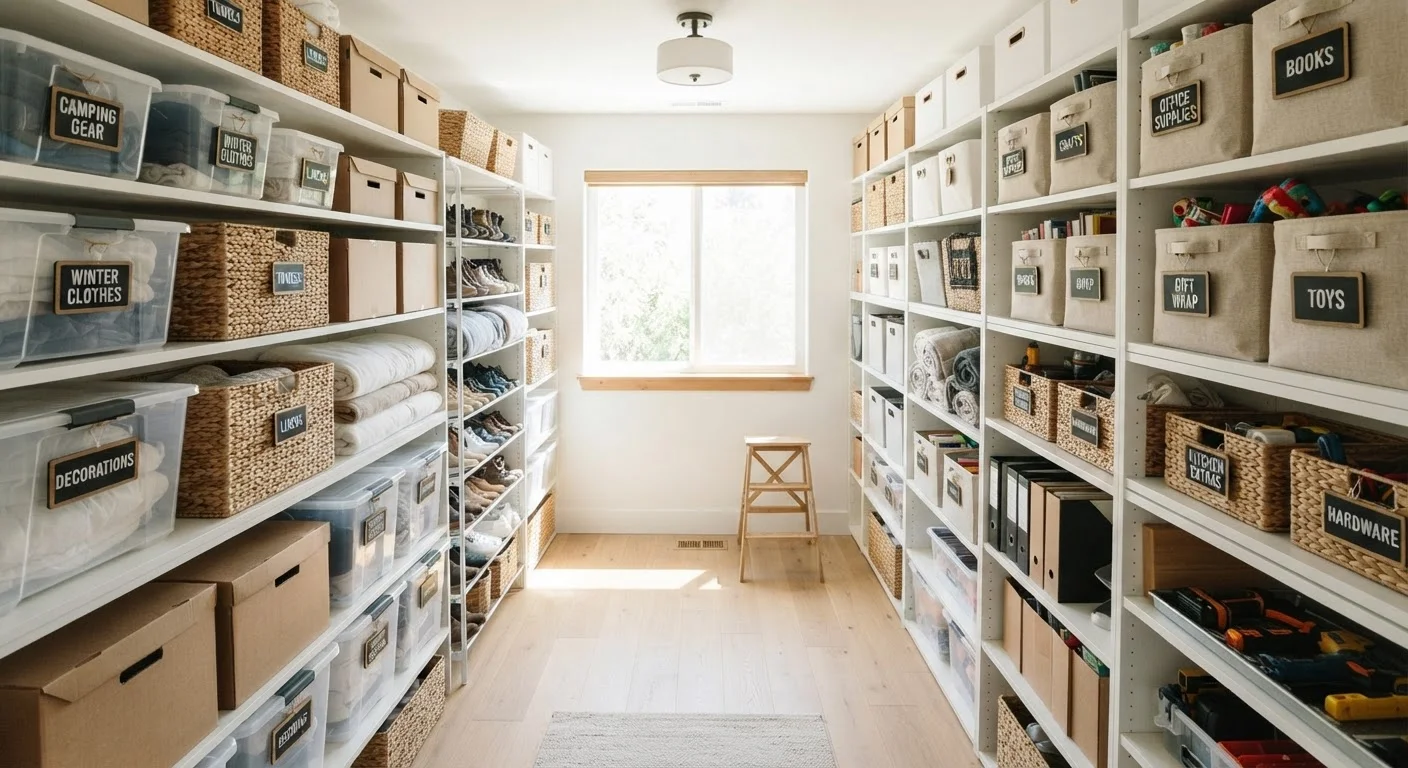
- Label your zones. Even informal labeling (a sticky note, a basket with a tag) reinforces the system and makes it easier for everyone in the household to maintain.
- Think in containers, not piles. Decanting - transferring items from their original packaging into uniform containers - is a common professional organizer technique that reduces visual clutter and makes inventory easier to see at a glance.
- Revisit your system seasonally. Organization is not a one-time event. As seasons change and household needs shift, what belongs in primary storage changes too.
Home organization shares some vocabulary overlap with broader home improvement projects. If you encounter construction or contractor terms during a storage renovation, our homeowner glossary can help.