Why Small-Apartment Organization Requires a Different Mindset
Organizing a large home and organizing a small apartment are genuinely different challenges. In a larger home, you can often solve a clutter problem by moving things to another room. In a small apartment, every square foot is doing visible work, and there's nowhere to hide disorganization. The goal isn't to cram more in - it's to make the space feel intentional and livable.
The most common mistake people make is jumping straight to storage purchases before addressing what they actually own. A useful first step is to think of your apartment as a fixed budget: every item you own is spending some of that budget. When the budget runs out, more things mean more crowding, not more comfort.
For a structured audit of each room, the room-by-room home organization checklist is a useful companion resource. It helps you spot problem areas before you start rearranging.
What you will need
Tools and Materials You'll Want on Hand
You don't need a major shopping trip to get started. Most of the initial work - decluttering, measuring, and planning - requires almost nothing. That said, a few practical items make the process significantly smoother once you move into the storage and placement phase.
Measuring tape
Measure wall space, furniture dimensions, and storage gaps to plan purchases and placement accurately.
Over-the-door organizers
Mount on interior doors to create instant storage for shoes, pantry items, or cleaning supplies.
Stackable storage bins or boxes
Consolidate similar items and make use of vertical shelf space efficiently.
Wall-mounted shelving
Add storage without consuming floor space, ideal for books, plants, and everyday essentials.
Label maker or adhesive labels
Keep bins and containers clearly identified so items are easy to find and return.
When you're ready to think more deeply about how to use your wall space versus your floor space, the guide on vertical storage versus horizontal storage walks through the trade-offs in detail.
Step-by-Step: Organizing Your Small Apartment
Follow these steps in order. Each one builds on the last, and skipping the declutter phase in particular will undermine everything that follows.
Do a full declutter before anything else
Organizing clutter just moves the problem around. Before you buy a single storage solution, go room by room and sort everything into three groups: keep, donate, and discard. Be honest - items you haven't used in over a year are prime candidates to leave. Work in short sessions of 20-30 minutes to avoid burnout.
Map out your vertical space
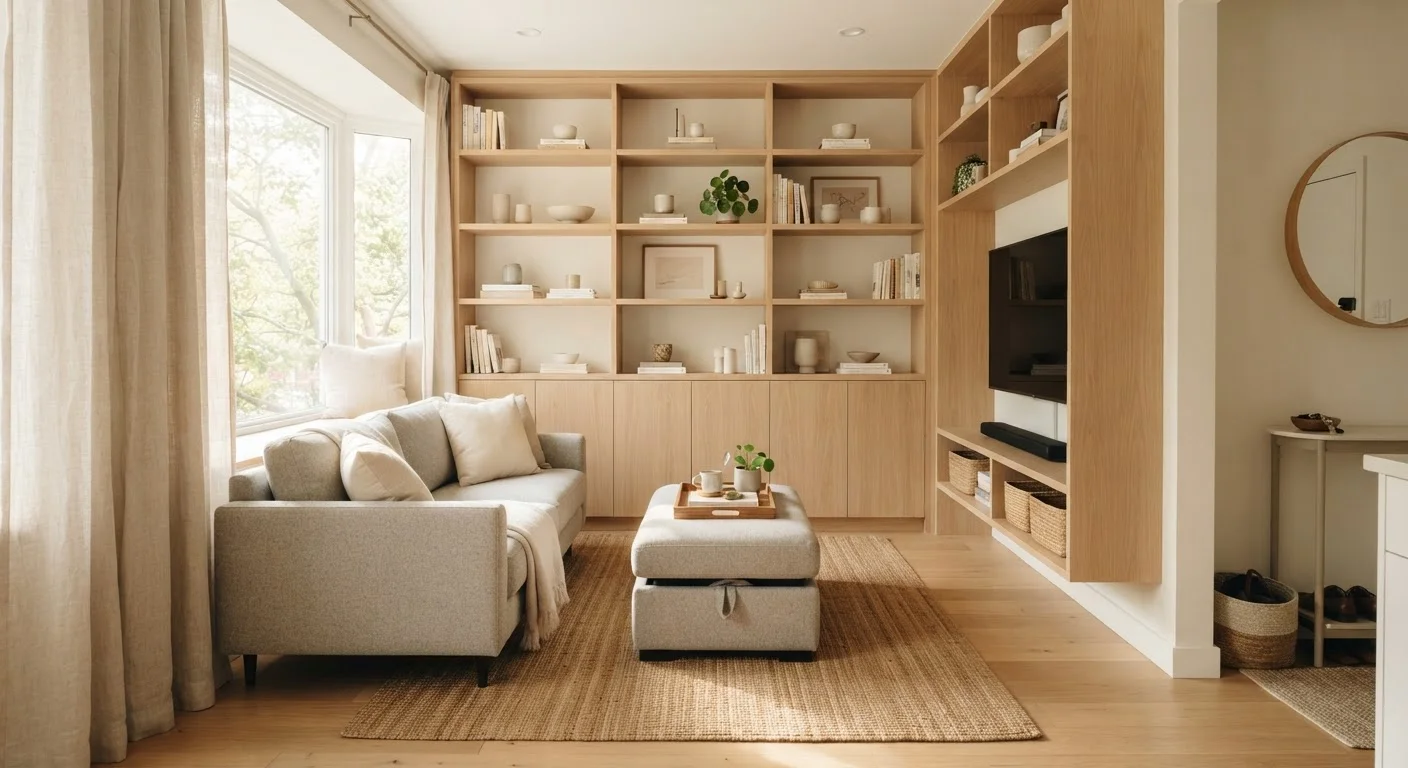
Walls are the most overlooked storage real estate in a small apartment. Use your measuring tape to identify blank wall sections above furniture, beside doors, and in hallways. Plan for shelves, pegboards, or hanging rails in these zones. Even a single floating shelf above a desk or sofa can absorb a surprising number of items.
Choose furniture that earns its floor space
Every piece of furniture in a small apartment should justify its footprint. A storage ottoman replaces a coffee table while hiding blankets and remotes. A bed frame with built-in drawers eliminates the need for a separate dresser. A dining bench with interior storage doubles as a linen chest. Before buying any furniture, ask whether it can serve at least two purposes.
Activate hidden storage zones
Most small apartments already have untapped storage you haven't noticed. The space under the bed fits flat storage containers for seasonal clothing or extra linens. The tops of kitchen cabinets can hold infrequently used appliances or decorative baskets. The back of every interior door is an opportunity for an organizer. Identify three hidden zones in your apartment and assign them specific categories of items.
Assign a home for every item
Clutter accumulates fastest when items don't have a consistent place to live. Once you've arranged your storage, assign and label every category. Mail goes in one spot, keys on one hook, charging cables in one drawer. This sounds simple, but it's the single habit most responsible for a space staying organized over time rather than reverting to chaos within a week.
Build a light maintenance routine
A small apartment can go from organized to chaotic faster than a larger home simply because there's less buffer space. A 10-minute reset at the end of each day - returning items to their assigned homes, dealing with mail, clearing the kitchen counter - is far more effective than periodic major overhauls. Treat it as a non-negotiable daily habit rather than an optional chore.
Making It Last: Comfort Without Compromise
Organization in a small apartment isn't a one-time project - it's an ongoing relationship with your space. The strategies above work best when paired with a genuine commitment to bringing less in. Before purchasing anything new, ask whether it has a designated home. If it doesn't, either create one or reconsider the purchase.
Comfort matters too. A hyper-minimalist space that feels sterile isn't the goal. You can keep books, plants, art, and the things that make a home feel personal - just be intentional about where they live and how many you're maintaining. Hidden storage opportunities most homes already have is worth reading once you've completed the initial setup - it often reveals capacity you didn't know existed.
If closet space is a particular pain point, exploring closet organization methods that match how people actually live can help you find an approach that fits your habits rather than requiring habits you don't have.
One In, One Out Keeps Clutter at Bay
A simple rule many small-apartment dwellers swear by: whenever something new comes in, something comparable goes out. New kitchen gadget? One old one leaves. New clothing item? Donate one you no longer wear. This prevents gradual accumulation from undoing the work you've put in.