Why a Room-by-Room Approach Works
Whole-home organization projects often stall because they feel too large to start. Tackling one room at a time gives you a clear boundary, a visible finish line, and the momentum that comes from completing something. Each room you organize also reveals patterns - where things accumulate, what storage is missing, and which habits need to change.
This checklist is designed to audit every major area of your home and take focused action. You don't need to do it all in a single weekend. Work through the checklist at your own pace, and return to it whenever a space needs a reset. If children share your home, see our guide to decluttering with kids in the house for strategies tailored to family spaces.
Before you begin any room, follow this universal rule: audit before you buy. Purchasing bins and baskets before you know what you actually own is one of the most common organization mistakes. Sort first, then shop for what's genuinely needed.
Sorting bins or boxes
Separate items into keep, donate, discard, and relocate piles as you work through each room.
Label maker or adhesive labels
Create clear, consistent labels for bins, shelves, and drawers throughout your home.
Measuring tape
Measure shelves, cabinets, and closets before purchasing any storage containers or organizers.
Storage bins with lids
Contain grouped items in closets, under beds, and in garage or basement storage areas.
Drawer dividers
Keep folded clothing, utensils, and small items sorted within drawers without mixing.
Donation bags or boxes
Collect items designated for donation so they leave the home promptly after sorting.
Room-by-Room Checklist
Work through the groups below in whatever order matches your priorities. Each category includes items rated by importance - focus on must items first, then layer in should and nice-to-have improvements over time.
Entryway & Mudroom
Kitchen
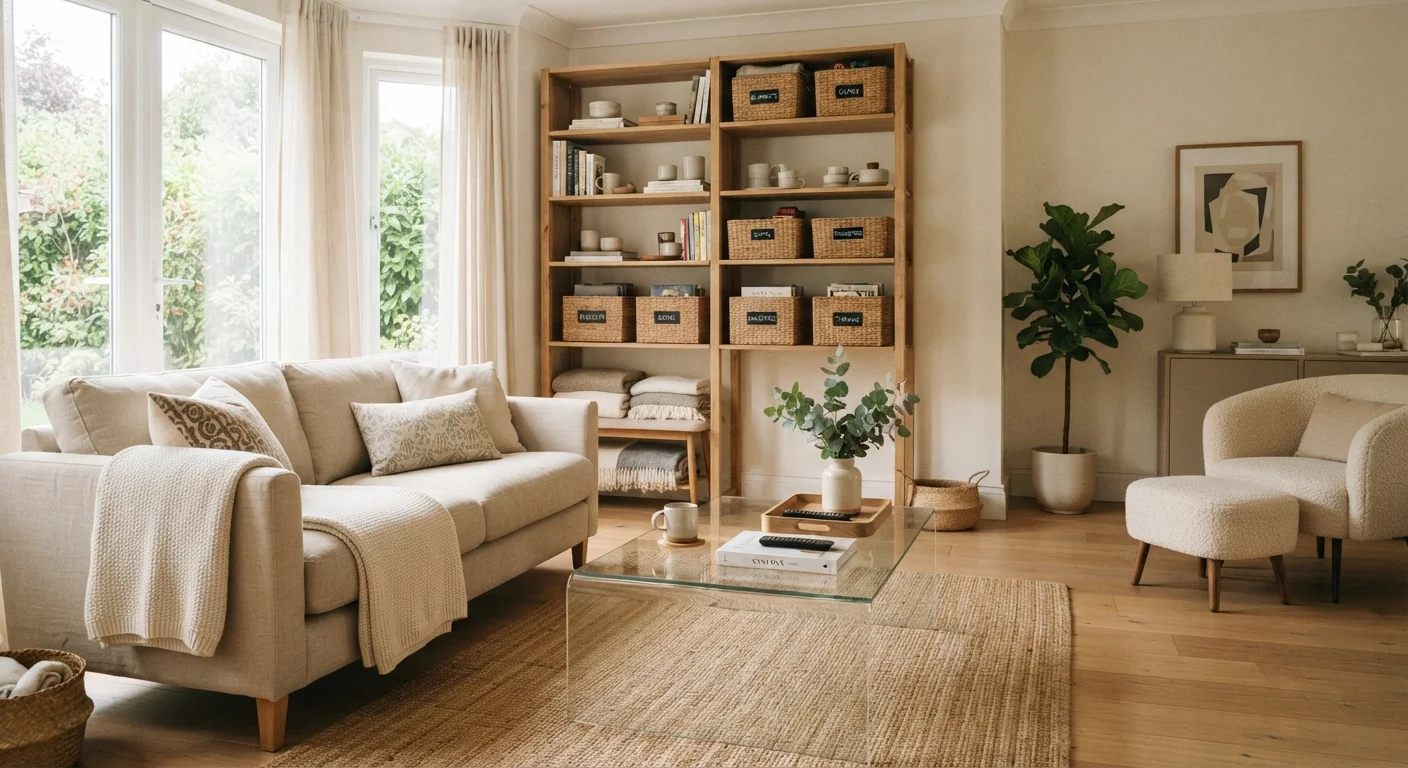
Living & Common Areas
Bedrooms
Bathrooms
Garage, Basement & Storage Areas
Don't Skip the Garage and Storage Areas
Garages, basements, and utility rooms are often the last spaces addressed - and the first to become unsafe. Overstacked shelving, improperly stored chemicals, and blocked pathways are genuine hazards. Always store hazardous materials like paints, solvents, and fuels in tightly sealed containers away from heat sources and out of reach of children. If you discover items that require special disposal (old paint, batteries, electronics), check with your municipality for approved drop-off programs rather than placing them in regular trash.
Once you've completed your room-by-room audit, tie your organization efforts into the broader upkeep of your home. Our seasonal home maintenance checklist helps you stay ahead of repairs and protect your home year-round, room by room.
Making It Stick: Habits Over One-Time Fixes
Organization isn't a one-time event - it's a system you maintain. The most organized homes share a few common habits: everything has a designated place, items are returned after use, and a brief weekly reset prevents buildup. Assign each household member specific zones of responsibility so the effort is shared.
If you're working with limited square footage, the principles here still apply - space constraints just require more deliberate choices. Our guide to organizing a small apartment offers targeted strategies for tighter spaces.
Finally, keep in mind that a disorganized environment can contribute to stress and mental fatigue. The act of creating order in your physical space often supports a clearer headspace. If you're curious about other ways to check in with yourself, our personal mental health audit offers a structured self-reflection approach.