Understanding the Core Difference
When space is tight, how you organize it matters just as much as how much of it you have. Storage strategy generally falls into two orientations: vertical (building upward along walls) and horizontal (spreading outward across floors and low surfaces). Before committing to one, it helps to understand what each is actually doing for your space.
Vertical storage treats wall height as usable real estate. Tall shelving units, wall-mounted cabinets, pegboards, and stacked organizers all work by moving belongings off the floor and up the wall - leaving floor area open for living. Horizontal storage, by contrast, keeps things at or near floor level: under-bed drawers, long low consoles, wide storage ottomans, and lateral file cabinets are all horizontal in nature.
If you're new to thinking about storage systematically, our guide to common home organization terms explains concepts like dead space and zone storage that are useful when planning either approach.
| Criterion | Vertical Storage | Horizontal Storage |
|---|---|---|
| Best room feature required | High ceilings (8 ft+) | Adequate floor or wall-base area |
| Floor space used | Minimal | Moderate to significant |
| Accessibility | Lower zones easy; upper zones require a stool | Easy at all levels |
| Safety considerations | Must anchor tall units to wall studs | Generally stable; tip risk is low |
| Best for | Books, bins, pantry, seasonal items | Daily-use items, clothing, bedding |
| Visual effect | Draws eye upward; can feel airy | Grounds the room; feels low-profile |
| Flexibility | High (modular systems common) | Moderate (limited by furniture footprint) |
Where Vertical Storage Shines
Vertical storage is particularly powerful in rooms where floor space is scarce but ceiling height is available. A standard room with 8- to 10-foot ceilings has significant unused wall space above eye level - and that's where vertical systems earn their keep.
In a small kitchen, open shelving above the counter keeps dishes and pantry goods accessible without consuming counter space. In a bedroom, a floor-to-ceiling wardrobe system can hold far more than a standard dresser while occupying a fraction of the footprint. In a home office, wall-mounted shelves above a desk clear the workspace entirely.
That said, vertical storage comes with real considerations. Safety is non-negotiable: any tall unit - especially one holding books, appliances, or heavy items - must be anchored to wall studs. Freestanding units that aren't secured can tip, which is a serious hazard in households with children or in areas prone to earthquakes. Always follow manufacturer anchoring instructions or consult a professional for heavy installations.
Accessibility is the other limitation. Items stored above shoulder height require a step stool, which makes vertical storage less practical for frequently used everyday items. Reserve the highest zones for seasonal or rarely used belongings.
~337 sq ft
Average U.S. apartment size in newer urban buildings
Urban Land Institute research has noted a trend toward smaller apartment units in major American cities, making vertical space optimization increasingly relevant.
68%
Americans who say clutter negatively affects their mood
A survey by the National Association of Professional Organizers found a strong majority of respondents linked home disorganization to stress and reduced productivity.
2-3x
Storage capacity gain using full wall height vs. waist-height shelving
General interior design guidance suggests that extending shelving from floor to ceiling rather than stopping at shoulder height can roughly double or triple linear storage capacity.
Where Horizontal Storage Works Best
Horizontal storage is the go-to when ceiling height isn't on your side - think finished basements with dropped ceilings, rooms with skylights or dormers, or any space where architecture limits how high you can build. It's also the better choice when the primary users of a space need ground-level access: young children, older adults, or anyone who finds overhead reaching uncomfortable or unsafe.
Under-bed storage is one of the most underused horizontal opportunities in American homes. Shallow rolling drawers or vacuum-seal bags stored under a platform bed can hold an entire off-season wardrobe without claiming closet space. Similarly, a wide storage bench at the foot of a bed or inside an entryway provides seating, surface area, and concealed storage in one piece of furniture.
Horizontal storage also tends to anchor a room visually, keeping the eye at a lower plane and sometimes making a space feel more relaxed and grounded - useful if the room already feels cramped or cave-like when tall units are introduced.
For more ideas on low-profile and hidden storage opportunities, see our article on hidden storage opportunities most homes already have.
Combining Both Approaches for Maximum Impact
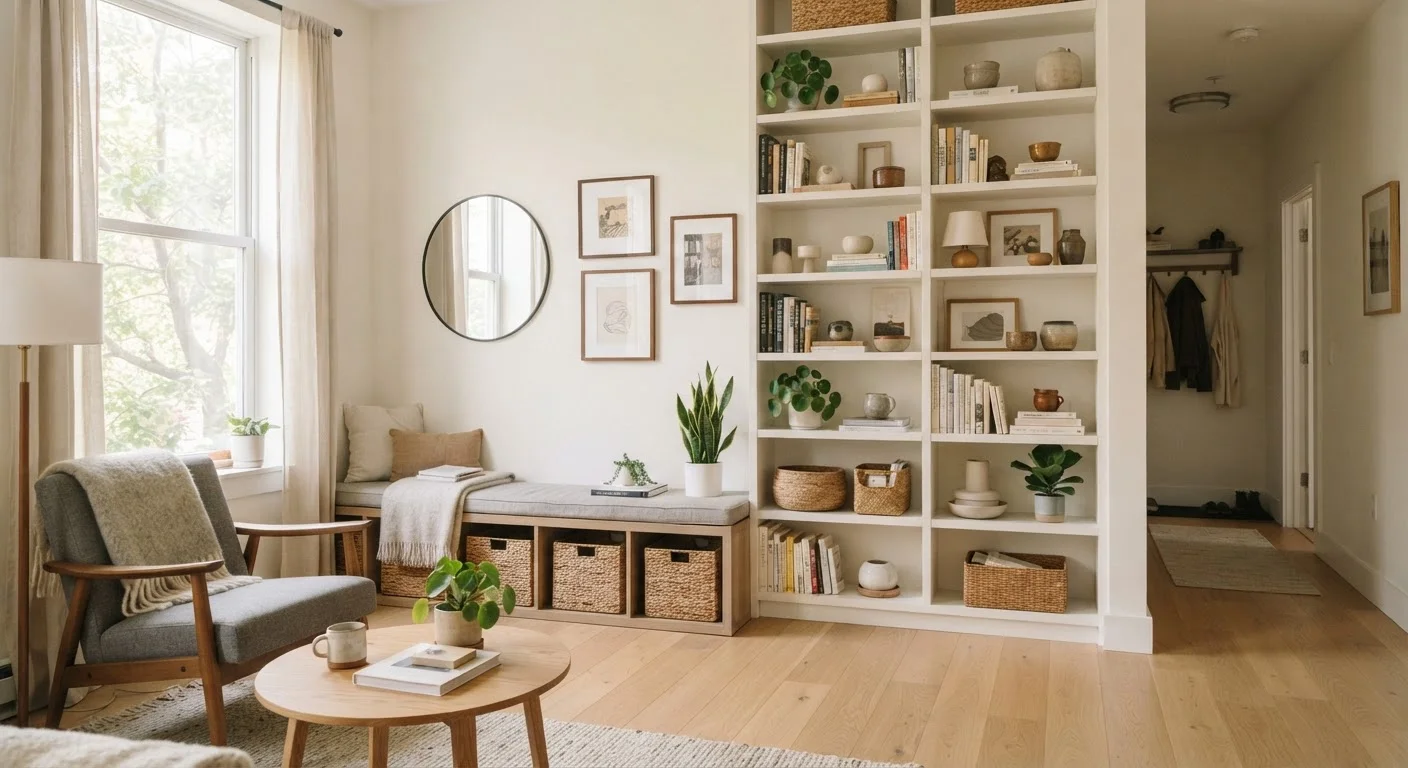
In practice, the most effective small-space storage plans blend both orientations - using vertical storage for capacity and horizontal storage for accessibility. A common and functional arrangement: tall shelving along one wall for books, bins, and less-used items, paired with a low storage unit or bench along an adjacent wall for daily-use objects.
Think in zones: items you reach for daily belong at waist-to-shoulder height regardless of whether the unit is vertical or horizontal. Items used occasionally can move up or down from that zone. Items used rarely - holiday decorations, extra bedding - go to the highest vertical reaches or the deepest under-bed drawers.
If you're working with a shared household, organizing myths about shared spaces worth revisiting - many families overestimate how much space they actually need and underestimate how much better zoning and labeling can work.
For apartment dwellers dealing with especially limited square footage, the article on organizing a small apartment without sacrificing comfort pairs well with the strategies here, offering room-by-room guidance.
A Note on Wall Construction and Weight Limits
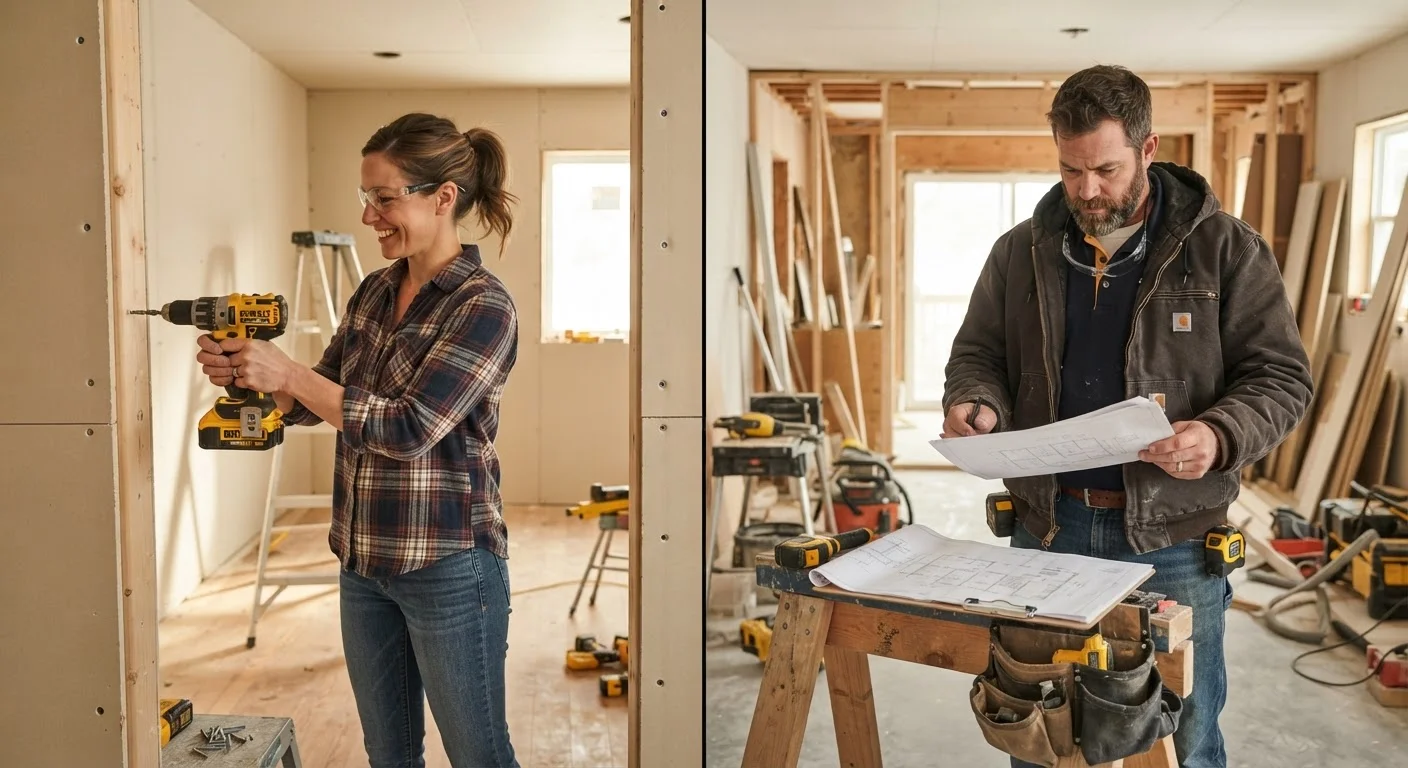
Before mounting heavy shelving or cabinets, it's worth knowing what your walls are made of. Drywall alone cannot support significant weight - fasteners must reach wall studs (the vertical wood framing behind the drywall) to hold safely. Stud finders are widely available and easy to use. For particularly heavy loads, or if you're renting and wall modifications are restricted, freestanding shelving systems with anti-tip straps provide a practical alternative. When in doubt about structural capacity, consult a qualified contractor or handyperson.