How Each Connection Type Actually Works
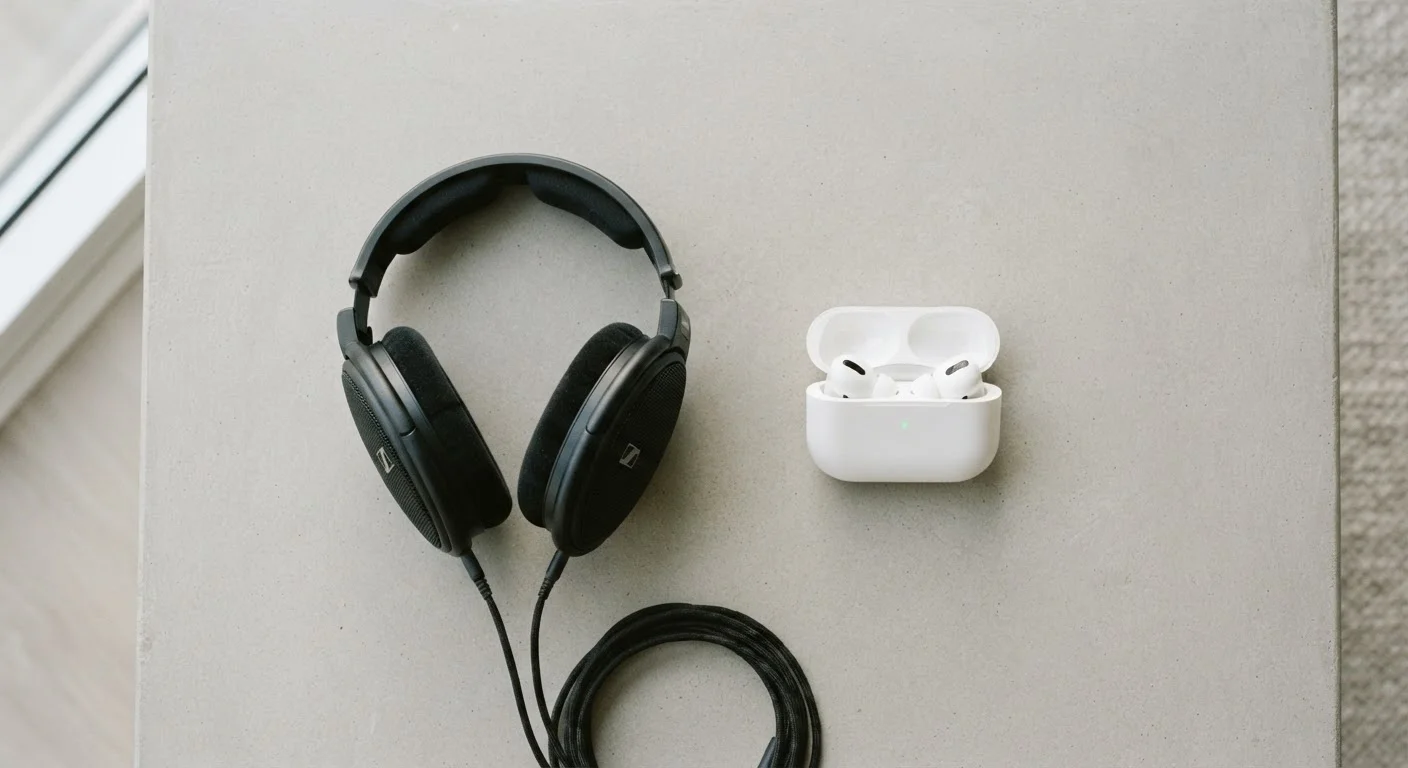
Wired headphones transmit audio as an analog electrical signal through a physical cable - typically a 3.5mm or 6.35mm jack, or in some newer cases a USB-C connector. The signal travels directly from the source device to the drivers in the headphone cups, with no conversion step required at the headphone end.
Wireless headphones - most commonly Bluetooth - receive a compressed digital audio stream from a transmitting device, decode it onboard using a codec (a format that compresses and decompresses audio data), and convert that signal to analog sound internally. Common codecs include SBC (the universal baseline), AAC (widely used with Apple devices), and higher-fidelity options like aptX, aptX HD, and Sony's LDAC. Both your headphones and your source device must support the same codec for it to be used. For a deeper look at how Bluetooth functions alongside other wireless technologies in your home, see how Bluetooth and Wi-Fi work differently.
Codec Compatibility Matters More Than Marketing
A headphone marketed as supporting aptX HD only delivers aptX HD audio if the source device - phone, laptop, or DAC - also supports that codec. When there's a mismatch, both devices negotiate down to a mutually supported codec, often the baseline SBC. Before assuming you'll get the highest-quality wireless audio a headphone can deliver, confirm codec support on both ends of the connection.
Advantages and Disadvantages at a Glance
Understanding where each format excels - and where it falls short - makes it easier to match a headphone type to your actual listening habits.
No battery required for most wired models
Passive wired headphones draw power directly from the audio source, meaning they're ready to use indefinitely without charging - a significant advantage for long work sessions or travel.
Consistent, uncompressed audio signal
Analog wired connections bypass codec compression, delivering the source audio without the encoding and decoding step that Bluetooth requires - a meaningful advantage for critical listening.
Lower latency for video and gaming
Wired connections introduce negligible signal delay compared to Bluetooth, making them more reliable for lip-sync accuracy when watching video or reacting quickly in games.
No wireless interference or dropouts
Physical connections aren't subject to RF congestion, walls, or device competition - environments that can degrade Bluetooth performance in busy homes or offices.
Freedom of movement without a cable
Wireless headphones eliminate the physical tether to a device, allowing listeners to move freely around a room or outdoors without managing cord length or tangling.
Compatible with devices lacking a headphone jack
Most modern smartphones have removed the 3.5mm port; wireless headphones connect via Bluetooth without needing adapters or dongles.
Multi-device pairing on many models
Many current wireless headphones can maintain simultaneous connections to two devices - a phone and a laptop, for example - and switch between them without manual re-pairing.
Cables tangle, strain, and eventually fail
Physical cables are the most common point of failure in wired headphones - connectors weaken with repeated bending, and damaged cables can introduce crackling or channel imbalance.
Increasingly requires an adapter on modern phones
The widespread removal of the 3.5mm headphone jack from smartphones means wired headphone users often need a USB-C or Lightning adapter, adding a step and a potential point of failure.
Limited range of movement
A cable physically tethers the listener to a source device, which is impractical during exercise, commuting, or any activity involving significant movement.
Requires regular charging
Wireless headphones with depleted batteries stop working mid-use; maintaining a charging routine is an ongoing responsibility that wired users don't face.
Audio quality depends on codec compatibility
Bluetooth audio quality varies based on which codec both devices support; a mismatch forces fallback to lower-quality SBC, potentially limiting what the headphones can deliver.
Higher latency than wired connections
Bluetooth processing introduces audio delay that ranges from noticeable to significant depending on codec and implementation - a drawback for gaming, video editing, or video playback.
Audio Quality, Latency, and Practical Listening
Wired connections transmit audio without compression and without the processing delay introduced by wireless transmission. That means two concrete benefits: slightly more consistent signal fidelity and lower latency. Latency - the gap between audio being sent and heard - matters most when watching video or gaming. Most Bluetooth headphones introduce somewhere between 100ms and 300ms of delay depending on codec and device; dedicated low-latency modes can reduce this, but rarely eliminate it entirely.
That said, for music listening specifically, the gap in perceived audio quality between a good wireless headphone using a high-fidelity codec and a comparable wired model is narrower than it once was. The codec in use, the quality of the headphone drivers, and the source audio file's resolution all have more impact on what you actually hear than the wired-versus-wireless distinction alone.
~200ms
Typical Bluetooth SBC codec latency
Standard SBC Bluetooth audio commonly introduces around 200 milliseconds of delay - enough to create visible lip-sync issues without software compensation.
~40ms
Low-latency aptX codec delay
Qualcomm's aptX Low Latency codec targets latency around 40ms, which is below the threshold most listeners perceive as a delay during video playback.
990kbps
Peak LDAC wireless bitrate
Sony's LDAC codec can transmit up to 990kbps over Bluetooth - significantly higher than SBC's ceiling - though actual performance depends on connection conditions.
Battery Life, Durability, and Day-to-Day Friction
Wireless headphones require charging. Depending on the model, battery life ranges from roughly five hours for smaller earbuds to thirty or more hours for over-ear models - with charging cases extending the total for earbuds. Forgetting to charge means silence when you need sound most.
Wired headphones are passive devices - they draw no power from an internal battery (though some active noise-canceling wired models do use a battery for the ANC circuitry specifically). This makes them perpetually ready to use. The trade-off is cable management: cables can tangle, strain at the connectors over time, and introduce noise if damaged. Meanwhile, wired connections are becoming less accessible as the 3.5mm headphone jack has been dropped from most flagship smartphones, often requiring a dongle or USB-C adapter.
If noise cancellation is a priority regardless of which type you choose, it's worth understanding the physics involved. Our explainer on how noise-canceling headphones actually work covers the underlying mechanics clearly.
Which Should You Choose?
The decision comes down to two questions: How do you primarily listen, and what friction are you willing to tolerate?
If you move around while listening - commuting, exercising, or working in varied spaces - wireless headphones remove real physical friction. If you sit at a desk, listen critically to music, edit audio, or game competitively, wired headphones offer reliability and low latency without any battery management overhead.
Budget also shapes the comparison. At lower price points, wired headphones tend to offer better driver quality per dollar because manufacturers aren't investing in wireless circuitry and battery components. At higher price points, the gap narrows considerably.
For readers thinking through similar value trade-offs in other categories, our tablet vs. laptop breakdown applies the same framework to portable computing decisions.
This article is for general informational purposes. Product specifications and technology standards evolve; verify compatibility with your specific devices before purchasing.