What a Data Cap Actually Limits
A data cap doesn't restrict your internet speed or the websites you can visit - it restricts the volume of data that flows through your connection in a given month. Think of it like a water meter: the pipes carry water at whatever pressure they're capable of, but your utility bill reflects total gallons consumed.
Every action you take online involves data transfer. Loading a webpage, sending an email, watching a video, joining a video call, downloading a software update - all of it counts. The question is how quickly those actions add up relative to your plan's monthly allowance.
For a deeper look at how providers write these terms into contracts, see what your internet plan's fine print actually means before you sign up for any service.
"Unlimited" Doesn't Always Mean Unrestricted
Many plans advertised as "unlimited" include a threshold of full-speed data - sometimes 20-100 GB on mobile plans - after which speeds are reduced for the remainder of the billing period. This practice, called deprioritization or throttling, is legal and common. Always read the plan details to understand what "unlimited" specifically means under that provider's terms.
When Data Caps Are a Genuine Concern
For some households, a data cap is a real financial and practical risk. The activities that consume data fastest include:
- Streaming video - Especially 4K content across multiple TVs or devices simultaneously. A family watching several hours of 4K daily can exhaust a 1 TB cap within weeks.
- Remote work with video conferencing - Platforms like video-call apps can use 1-3 GB per hour of meeting time, which accumulates quickly for full-time remote workers.
- Cloud backups and file syncing - Automatic photo uploads, cloud storage sync, and system backups run in the background and are easy to overlook.
- Online gaming downloads - Modern game titles and updates regularly exceed 50-100 GB per download. Frequent players can burn through significant data just keeping games current.
Multi-person households with several devices active at once multiply all of these figures. If your home has three or four people each streaming, working, and gaming independently, a moderate data cap can feel very restrictive very quickly.
1.2 TB
Common monthly data cap on cable broadband plans
Many major U.S. cable internet providers apply a monthly data threshold of approximately 1.2 terabytes, with overage fees or unlimited add-ons available beyond that point.
~7 GB/hr
Data used streaming 4K video per stream
Streaming a single 4K video stream can consume roughly 7 gigabytes per hour, according to general industry estimates - making it one of the most data-intensive common household activities.
500+ GB
Estimated monthly use for a typical streaming household
A household with multiple streamers and a remote worker can reasonably expect to consume several hundred gigabytes per month before factoring in gaming or cloud backups.
When Data Caps Probably Won't Affect You
Not every household needs to worry about hitting a cap. If your internet use consists mainly of browsing websites, checking email, listening to music, and occasional standard-definition video - and you live alone or with one other person - you may use far less than 200-300 GB per month. In that scenario, a plan with a 1 TB cap leaves generous headroom.
Similarly, people who spend most of their working hours at an office and use internet primarily in the evenings for light entertainment often find that cap-related concerns don't apply to their routine. The key is knowing your actual usage before assuming a cap is a problem - or dismissing it entirely.
For related context on how speed and usage interact, common internet speed myths explains why households often misread their own needs.
How to Estimate Your Household's Monthly Data Use
A rough monthly estimate is straightforward to calculate. Start by logging typical activity per person, per day, then multiply across your household:
- Video streaming: Note the resolution setting and hours watched daily. At HD quality, 2 hours per day per person equals roughly 180 GB per month.
- Video calls: At approximately 1.5 GB per hour, a 40-hour remote workweek adds about 240-260 GB per month for one person.
- Gaming downloads: Estimate downloads per month by size - one large title update can be 60 GB.
- General browsing and email: Usually negligible - browsing and email collectively may use 5-15 GB per month for a typical user.
Adding these numbers gives a reasonable baseline. Your provider's usage dashboard will show actual figures once you're on a plan, which is useful for adjusting your estimate going forward. Check habits that keep you within your plan for practical strategies if you find yourself consistently near your limit.
Check Your Usage Before Your Next Bill
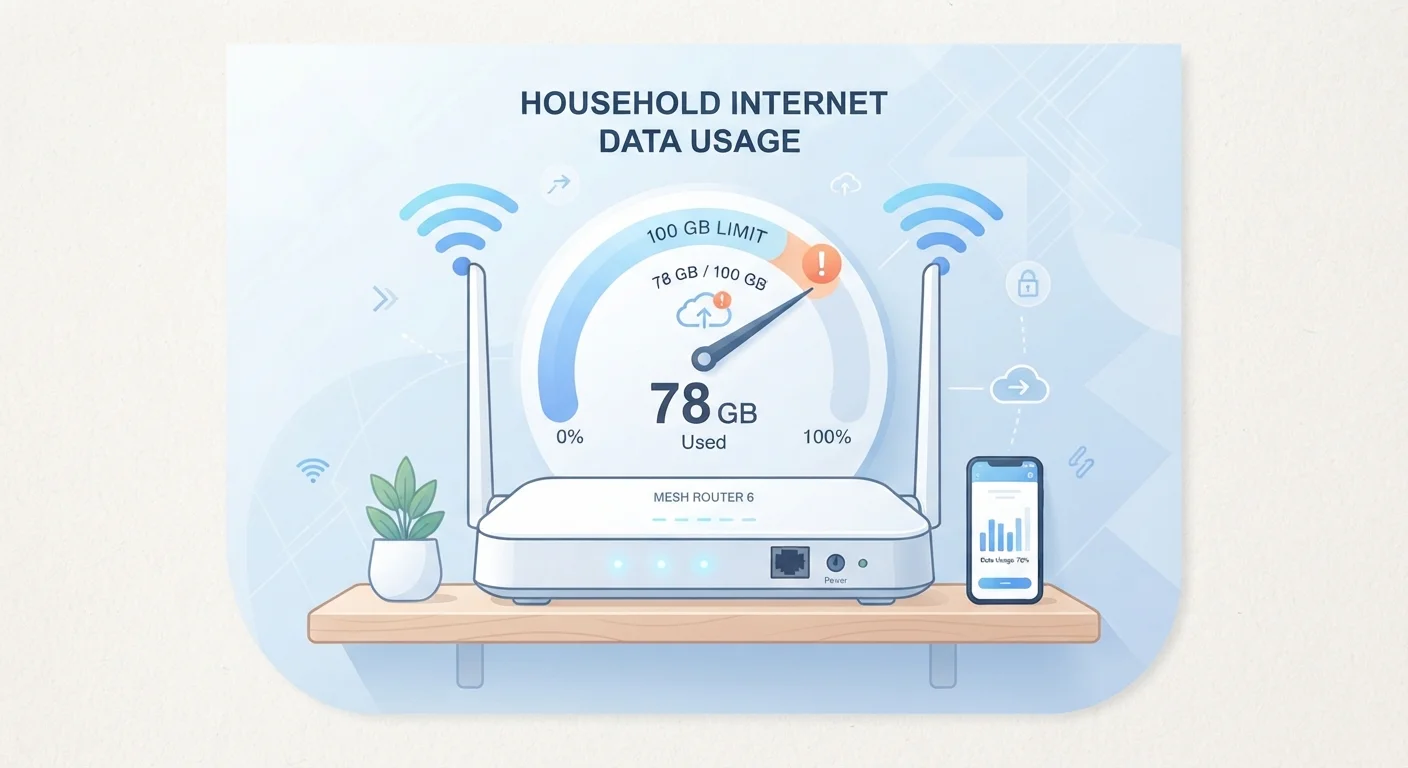
Most providers offer a real-time data usage tracker through their app or online account portal. Logging in mid-month gives you an accurate picture of where you stand relative to your cap, so you can adjust behavior - like lowering video quality or pausing large downloads - before hitting your limit.
Caps on Mobile vs. Home Internet Plans
Data cap policies differ significantly between mobile and home broadband services. On mobile plans, data caps - and the speed throttling that follows after exceeding a threshold - remain standard. Even plans marketed as "unlimited" typically include a defined amount of full-speed data before speeds are reduced, a detail worth confirming before selecting a plan.
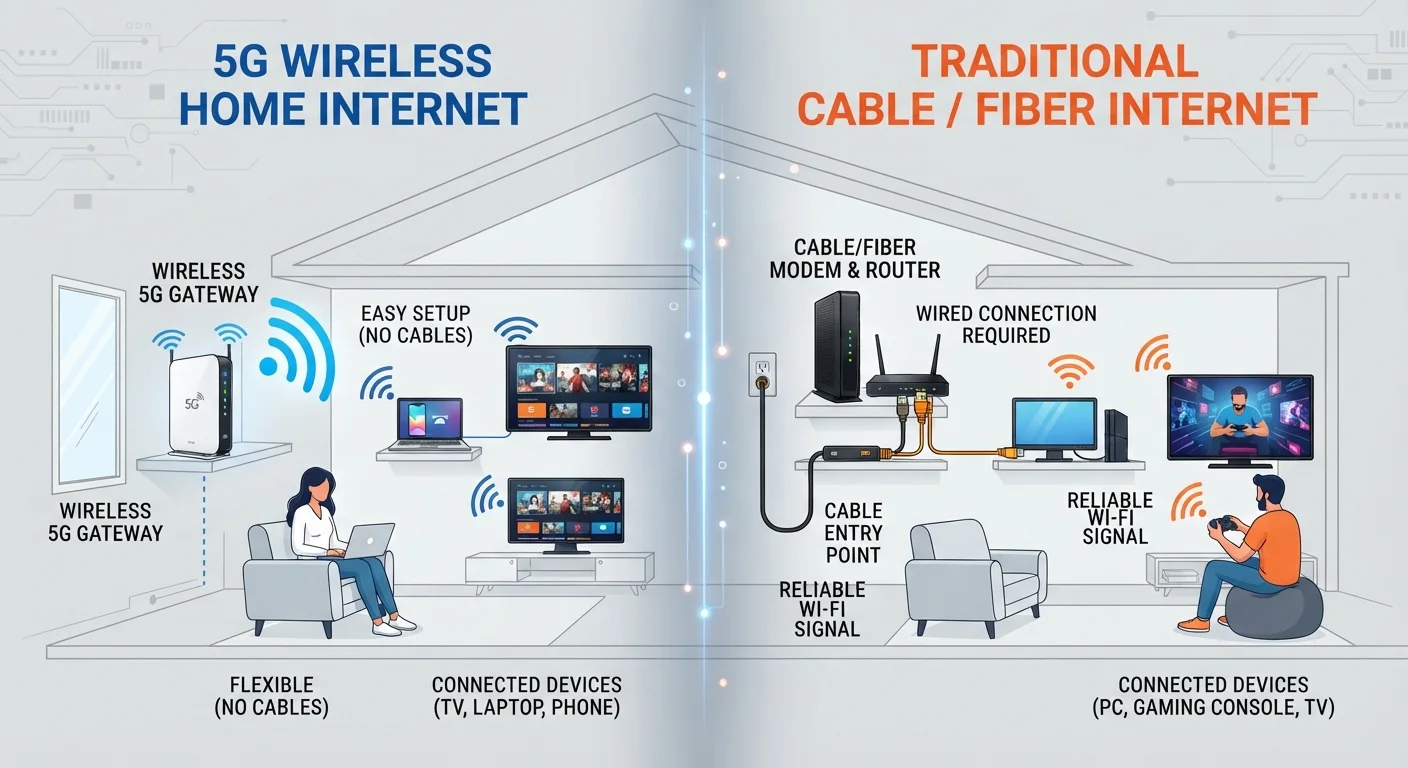
Home broadband is more varied. Fiber-optic internet services tend to offer genuinely unlimited data. Cable broadband plans commonly include a monthly threshold - often around 1.2 TB - with overage charges or the option to add an unlimited upgrade. Fixed 5G home internet plans vary considerably; how 5G home internet compares to traditional broadband covers those trade-offs in detail.
Before committing to any plan, review the specific data policy, not just the headline speed. The questions worth asking before signing a contract include several aimed directly at uncovering cap-related terms that providers don't always highlight upfront.