
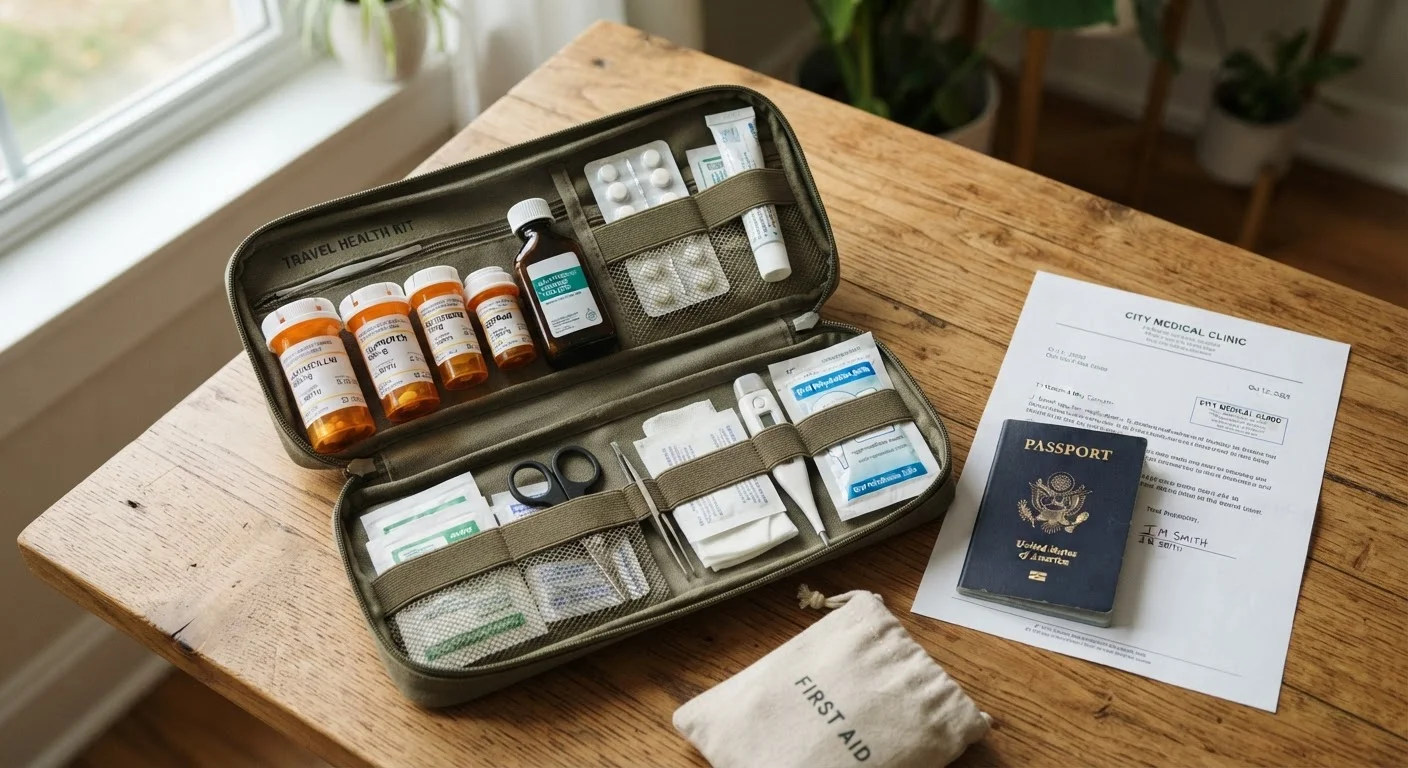
Why Medication Rules at Borders Deserve Serious Attention
For many travelers, prescription medications are non-negotiable - they're as essential as a passport. But the moment you cross an international border, the rules governing those medications shift. What's a routine prescription at your U.S. pharmacy can become a complication at a foreign customs checkpoint if you haven't prepared properly.
This isn't a reason to avoid travel. It's a reason to plan ahead. Customs officers in many countries have the legal authority to confiscate medications that aren't properly documented, and in some cases, travelers have faced serious legal consequences for carrying substances that are controlled or prohibited at their destination - even when those substances were legitimately prescribed at home. See how medication prep fits into your broader international travel prep checklist before your departure date.
The good news: most travelers who do a little homework in advance sail through without any issues.
Documentation That Can Save You at the Border
The single most important step you can take is arriving with the right paperwork. Customs officials can't verify your medical history - but they can read a document.
Carry all medications in their original, pharmacy-labeled containers.
Original containers show the dispensing pharmacy, prescribing doctor, drug name, dosage, and your name - together, these details establish legitimacy. A bag of loose pills offers no such proof and can be flagged immediately by customs officers.
Obtain a signed letter from your prescribing doctor before departure.
A physician's letter confirms your diagnosis (in general terms), the medication name including its generic equivalent, dosage, and the medical necessity of the drug. It provides a human-readable explanation that complements the pharmacy label and can resolve questions at the border.
Research whether your specific medications require an import permit at your destination.
Some countries require travelers carrying controlled substances - including certain pain medications, anxiety drugs, or stimulants - to obtain a formal import permit before arrival. Arriving without one can result in confiscation or legal problems regardless of your documentation.
Use generic (international nonproprietary) drug names in all documentation.
Brand names differ between countries - what's called one name in the U.S. may be sold under a completely different name abroad. Using the generic chemical name ensures officials and pharmacists can identify the substance regardless of what it's called locally.
Split your medication supply between carry-on and checked luggage on longer trips.
Checked bags occasionally get lost or delayed. Keeping at least a portion of your medication supply in your carry-on ensures you're not left without critical drugs if your bag doesn't arrive when you do.
Beyond the letter and labels, consider asking your pharmacist for a printed medication information sheet, which lists the drug's generic name, dosage form, and pharmacological class. Generic names matter because brand names often differ by country. For controlled substances in particular - things like ADHD medications, opioid pain relievers, or benzodiazepines - some countries require a formal import permit obtained in advance through their health ministry or consulate. This is not a quick process; permits can take weeks. Start early.
For a broader look at which documents to keep organized on any international trip, the travel documents reference guide is a practical starting point.
Researching Your Destination's Rules
Not every country treats medications the same way. Japan, for example, has strict rules about certain common medications - some over-the-counter decongestants sold freely in the U.S. are prohibited there. The United Arab Emirates restricts several medications that would be unremarkable at a U.S. pharmacy. Indonesia and other countries have tight controls on opioids even in small quantities.
50+
Countries with restrictions on common U.S. medications
Travel health advisors routinely note that more than 50 countries restrict or prohibit medications that are legally dispensed in the United States, according to general guidance from U.S. State Department country pages.
30 days
Maximum supply allowed in many countries for controlled substances
Many destination countries cap the quantity of controlled substances a traveler may bring to a 30-day supply, and some set the limit even lower - verify with the destination's health authority.
The safest research path is to contact the destination country's embassy in Washington, D.C., or check its health ministry website directly. The U.S. Department of State also publishes country-specific information that can flag known medication restrictions. Do this well before your trip - ideally at the same time you're sorting out visas and travel insurance. If you're transiting through a third country even briefly, research that country's rules too, since you'll technically be subject to its customs authority.
Understanding the broader landscape of border crossings - including what customs officers look for - is covered in depth in our piece on the hidden friction points of crossing international borders.
Packing and Carrying Your Medications Safely
Once your documentation is in order, packing thoughtfully reduces both risk and stress. Keep medications in your carry-on bag whenever possible - checked luggage can be lost, delayed, or exposed to extreme temperatures in the cargo hold, none of which is ideal for medications that require stable conditions.
If you take a medication that requires refrigeration, research the airline's policies and your hotel's in-room refrigeration options in advance. Many medications marketed as requiring refrigeration can tolerate room temperature for short periods, but this varies - confirm specifics with your pharmacist or prescribing doctor before travel, not during it.
Travelers on longer trips should also carry a slightly larger supply than they expect to need. Pharmacies abroad may not carry your specific medication, may require a local prescription, or may sell a different formulation. A buffer of a few extra days' supply is a reasonable precaution - just don't exceed the quantity limits set by your destination country, which can sometimes be as low as a 30-day supply for controlled substances.
If you're building out your full pre-trip plan, the international travel complete planning reference walks through health prep alongside visas, money, and safety in one place.
Ask About a Travel-Sized Supply
If your medication comes in a large bottle, ask your pharmacist whether they can provide a smaller, properly labeled travel container for your carry-on. Some pharmacies can dispense a portion of your supply in a second labeled bottle at no extra charge - particularly useful for travelers who prefer lighter bags. Always confirm that both containers are labeled with your name, the drug name, and the prescribing doctor.