
Why Travel Finance Deserves Dedicated Planning
Money problems abroad aren't just inconvenient - they can derail an entire trip. A frozen card in a city where you don't speak the language, or a surprise fee that quietly drains your account, can turn an adventure into a stressful scramble. The good news is that most financial mishaps travelers encounter are entirely preventable with a bit of planning before departure.
This isn't about restricting your budget - it's about making sure your money is accessible, secure, and working efficiently while you're away. If you're heading abroad for the first time, our guide for first-time international travelers covers the broader picture. Here, we go deep on the financial layer.
Notify your bank and credit card issuers before departure
Banks use automated fraud detection systems that flag purchases in unexpected locations. Without a travel notice, your card can be frozen mid-trip - often at the worst possible moment. A quick call or app notification takes under five minutes and prevents a major headache.
Carry at least two payment methods from different networks
Visa and Mastercard acceptance varies by country and even by individual merchant. Carrying cards on two separate networks - and ideally from two different banks - ensures that if one card is blocked, declined, or lost, you have an immediate fallback.
Understand your card's foreign transaction fee policy before you travel
Many standard credit and debit cards charge a fee of 1-3% on every international purchase. Over a two-week trip with regular spending, this adds up noticeably. Some cards waive these fees entirely, making them significantly more efficient for international use.
Use bank-affiliated ATMs for cash withdrawals rather than currency exchange kiosks
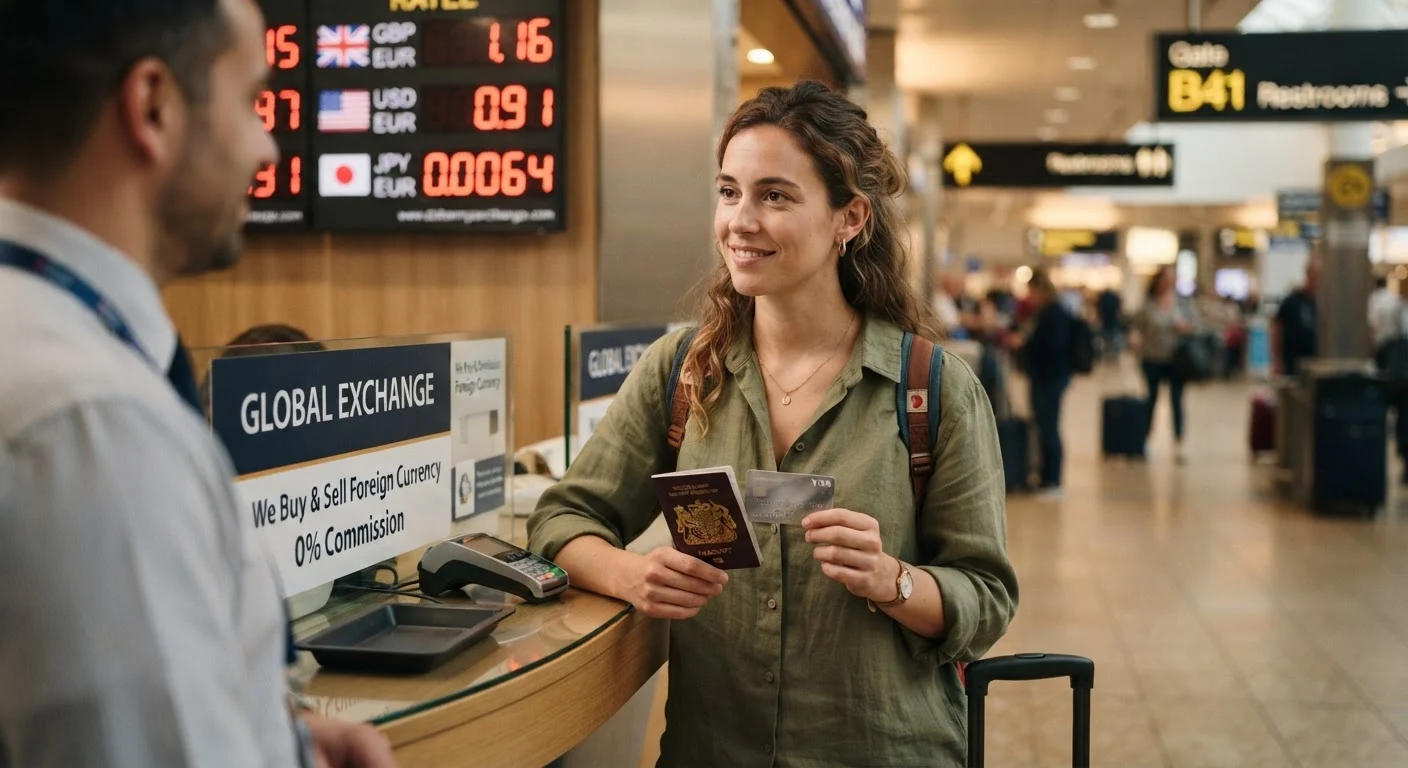
Airport and tourist-area currency exchange counters typically offer poor exchange rates with additional service fees layered on top. ATMs connected to established banking networks generally offer rates closer to the interbank rate, making them a more efficient source of local currency.
Avoid conducting financial transactions over public Wi-Fi without a VPN
Open networks in airports, hotels, and cafés can be monitored by third parties looking to intercept login credentials or financial data. Using your phone's cellular data or a VPN encrypts your connection and significantly reduces this risk.
The Hidden Cost of Convenience
One of the most common financial surprises travelers encounter is the accumulation of small fees. Foreign transaction fees, currency conversion markups, and out-of-network ATM charges can collectively add up to meaningful sums over a week or two of travel. Understanding where these costs come from is the first step to avoiding them.
1-3%
Typical foreign transaction fee on standard cards
Many standard U.S. credit and debit cards charge this fee on every purchase made in a foreign currency, according to general card issuer disclosures.
Up to 10%
Markup at airport currency exchange kiosks
Consumer finance organizations have noted that airport currency exchange counters can apply markups well above interbank rates when all fees are factored in.
Currency exchange kiosks in airports are notoriously poor value - their convenience comes at a steep markup. Withdrawing local currency from an ATM connected to a major bank network typically offers a more competitive rate, though your home bank may still charge a withdrawal fee. It's worth reading the fine print on your accounts before you go. For a thorough look at the risks specific to debit cards overseas, see why your debit card can be a problem abroad.
Best Practices for Keeping Your Money Safe and Accessible
The following practices represent the core habits of financially prepared travelers. Some take only minutes to set up; others require a bit more advance planning - but all are worth the effort before you board.
It also pays to think about digital security. Logging into your bank account over a hotel's public Wi-Fi network exposes your credentials to potential interception. Using your phone's mobile data connection or a reputable VPN (virtual private network) for any financial activity is a meaningful safeguard. Scam tactics targeting travelers online are increasingly sophisticated - our overview of phishing and digital scam methods is worth a quick read before you go.
For a broader pre-departure checklist that includes financial prep alongside documents and health considerations, The International Travel Prep Checklist is a useful companion.
When Things Go Wrong: Having a Financial Backup Plan
Even well-prepared travelers can face unexpected situations - a pickpocketed wallet, a card that gets frozen after an unusual purchase, or a bank that can't be reached across time zones. Having a contingency plan in place before any of that happens makes all the difference.
Keep Your Bank's Contact Info Handy
Most toll-free bank numbers don't work when dialed from outside the United States. Before you travel, locate the international collect number on the back of your card or in your bank's app, and store it somewhere you can access without an internet connection - such as a note in your travel documents. This number is your lifeline if your card is compromised while abroad.
Keep a small emergency reserve of cash - ideally in U.S. dollars or the local currency - stored separately from your main wallet. Many travelers use a hidden money belt or a secure inner pocket in their bag for this purpose. If you're traveling with a partner, splitting cards and cash between you so that no single theft wipes out everything is a simple and effective strategy.
If something more serious goes wrong - beyond a lost card - our article on what to do when plans fall apart overseas walks through your options. And for a complete financial picture of what travel actually costs, The Anatomy of a Travel Budget helps ensure you've budgeted for the full picture before you leave.