What Engine Oil Actually Does
Engine oil performs several critical jobs simultaneously. Its primary role is lubrication - creating a thin film between metal surfaces that would otherwise grind against each other at high speed. Without it, components like pistons, camshafts, and crankshaft bearings would generate catastrophic friction within minutes.
Beyond lubrication, oil also helps regulate engine temperature by transferring heat away from high-stress areas, carries microscopic metal particles and combustion byproducts to the oil filter for removal, and contains chemical additives that prevent corrosion and foam buildup.
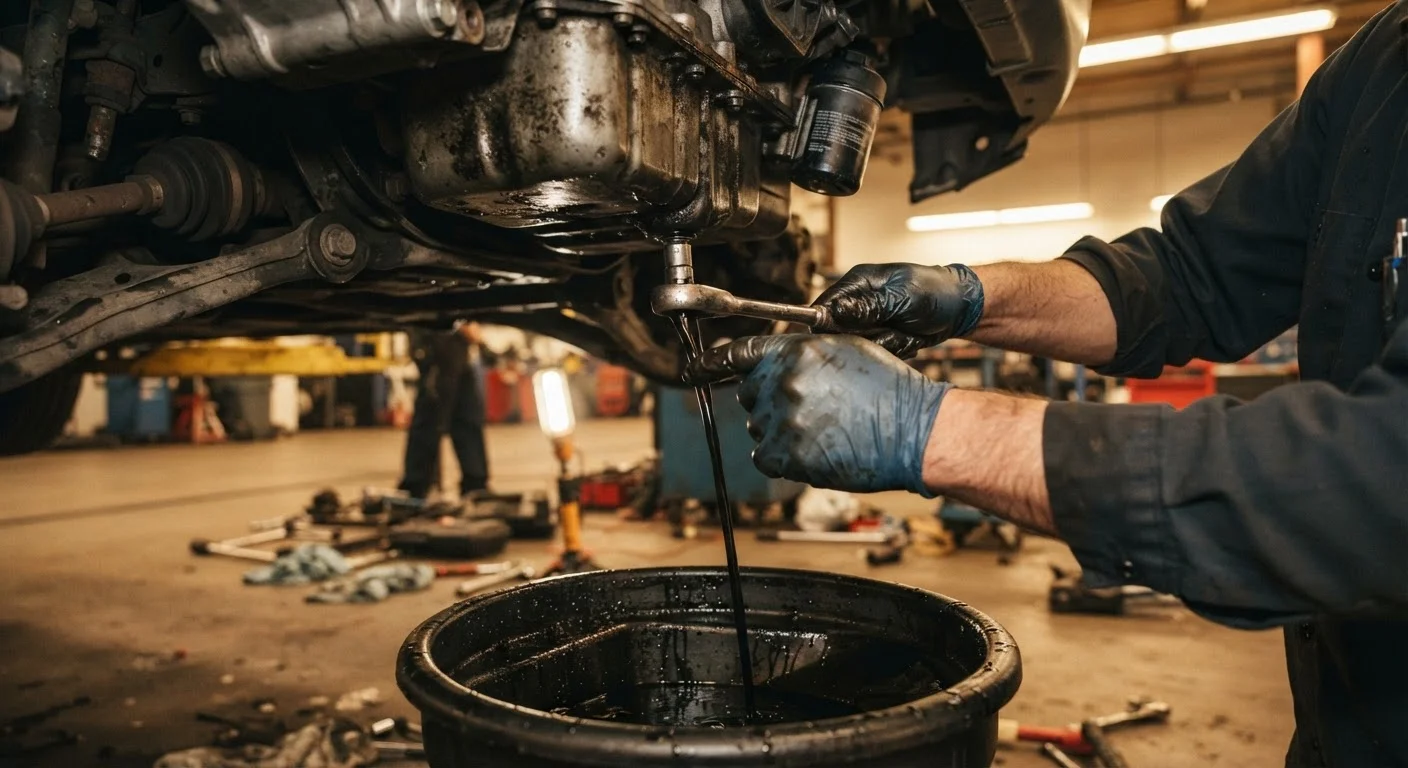
The problem is that these additives deplete over time. Heat, pressure, and contamination gradually break down the oil's molecular structure, reducing its viscosity and effectiveness. That's why fresh oil is amber-colored and clean, while old oil turns dark and gritty. Understanding this process helps explain why oil changes aren't optional maintenance - they're the foundation of engine longevity.
5,000-10,000 mi
Typical synthetic oil change interval
Most vehicle manufacturers now specify synthetic oil change intervals well beyond the old 3,000-mile guideline, according to published owner's manuals.
~$4,500
Average cost of engine replacement
Engine repairs or replacements from neglected maintenance are among the most expensive automotive repairs, often ranging from several hundred to several thousand dollars depending on the vehicle.
~65%
Drivers who check oil monthly
Industry surveys suggest a significant portion of drivers do not regularly check their oil between scheduled service visits, increasing the risk of undetected issues.
How Often You Actually Need an Oil Change
The old industry rule of every 3,000 miles was once reasonable when conventional oil and less refined engines were the standard. Today, it no longer applies to most vehicles. The right interval depends on three factors: the type of oil your vehicle uses, your driving conditions, and your manufacturer's specifications.
For vehicles using full synthetic oil - which is now factory-fill in many newer models - intervals of 7,500 to 10,000 miles are common. Some manufacturers specify up to 15,000 miles under ideal conditions. Conventional oil typically requires changes every 3,000 to 5,000 miles. Synthetic-blend oil falls in between.
Your owner's manual is the definitive source for your specific vehicle. It includes a maintenance schedule tailored to your engine, not a generic average. For a deeper look at how to read and apply that schedule, see how to decode your owner's manual maintenance section.
Use Your Owner's Manual, Not the Sticker
The oil change reminder sticker applied by some service shops is sometimes set conservatively at 3,000 miles regardless of your vehicle's actual needs. Always cross-reference with your owner's manual, which reflects your manufacturer's tested recommendation for your specific engine and oil type. Following the manual - not a generic sticker - is the right baseline.
Severe vs. Normal Driving Conditions
Many drivers are surprised to learn that their daily commute qualifies as "severe" driving. Manufacturer maintenance schedules typically define two categories: normal and severe. Severe conditions - which trigger shorter oil change intervals - include:
- Frequent trips under 5 miles, which don't allow the engine to fully warm up
- Stop-and-go urban traffic
- Towing or hauling heavy loads regularly
- Driving in extreme cold or heat
- Operating in dusty or dirty environments
Under severe conditions, manufacturers often recommend cutting the standard interval by 30 to 50 percent. If several of these apply to your driving routine, erring on the side of more frequent changes is a reasonable precaution. For guidance on how maintenance priorities shift as your vehicle ages, high-mileage vehicle maintenance offers useful context.
What Happens When You Skip an Oil Change
Missing a single oil change by a few hundred miles is unlikely to cause immediate harm in most vehicles. But the damage from consistently delayed changes accumulates in ways that aren't immediately visible - until they become expensive.
When old oil is left in the engine too long, it oxidizes and thickens into a dark, tar-like substance called engine sludge. Sludge can block narrow oil passages, starving parts of lubrication. The consequences escalate in stages:
- Increased friction and wear - metal-on-metal contact accelerates as the oil film thins
- Elevated operating temperatures - degraded oil transfers heat less effectively
- Sludge accumulation - passages clog, reducing oil flow to critical components
- Accelerated component failure - bearings, camshafts, and timing components wear prematurely
- Potential engine seizure - in severe cases, catastrophic and irreversible engine failure
For a detailed look at what occurs inside the engine during neglect, what skipping oil changes does to your engine walks through the progression step by step.
Conventional vs. Synthetic: Does It Matter for Your Interval?
The type of oil in your engine has a direct bearing on how long it remains effective. Conventional motor oil is refined from crude oil and contains natural impurities that limit its longevity. Full synthetic oil is engineered at a molecular level for greater stability, better performance at temperature extremes, and a longer service life.
Synthetic oil isn't universally necessary, but it offers meaningful advantages in certain situations: high-performance engines, vehicles operated in very hot or cold climates, older engines prone to sludge buildup, and vehicles that frequently tow or haul. For a detailed comparison of how these oil types perform under different conditions, see conventional vs. synthetic motor oil.
Whichever oil type your vehicle uses, the manufacturer's recommended viscosity grade - printed in the owner's manual and often on the oil cap - must be followed. Using the wrong viscosity can compromise lubrication even with fresh, high-quality oil.
Staying on Top of Oil Health Between Changes
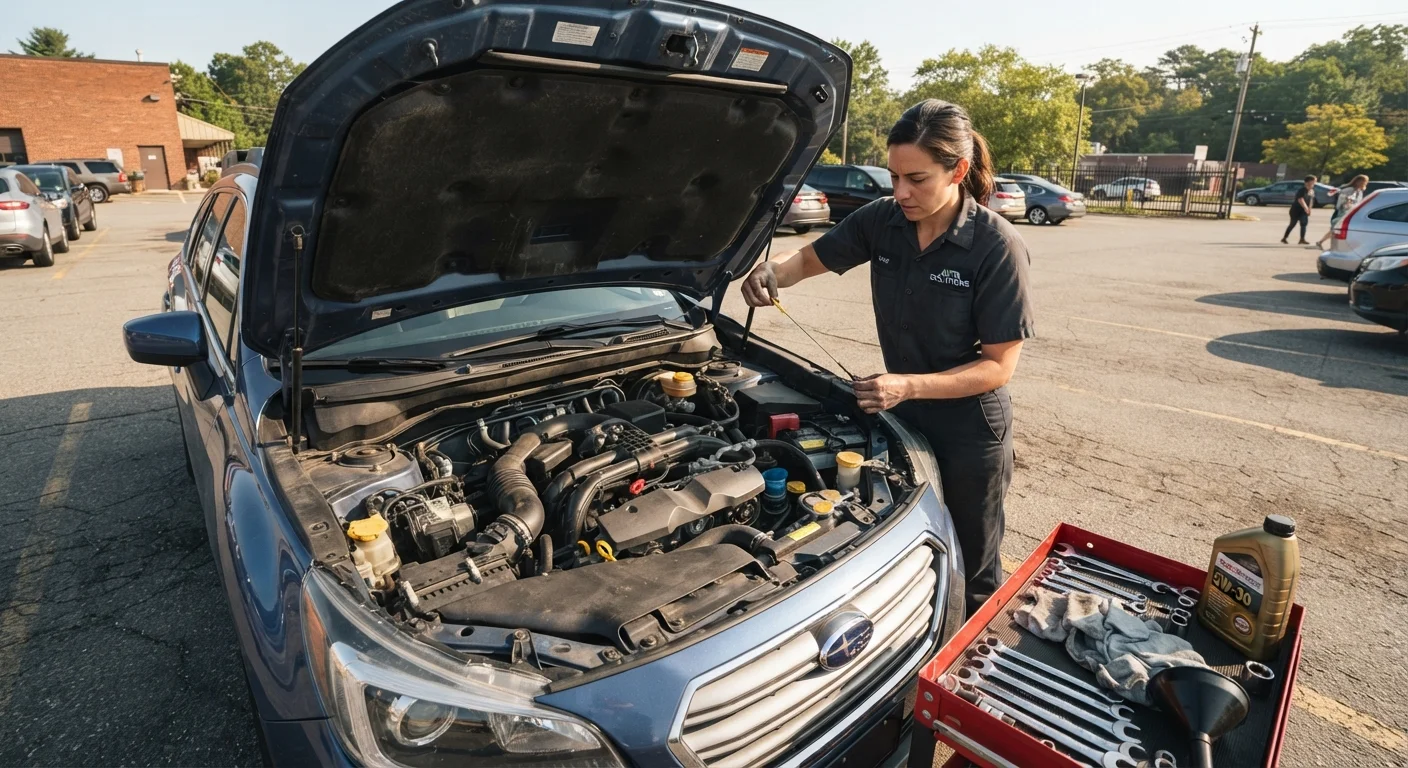
You don't have to wait for a service reminder to know how your oil is doing. A monthly dipstick check takes under two minutes and provides a useful early warning of problems. Pull the dipstick, wipe it clean, reinsert it fully, then pull it again. Look for two things: the oil level (should fall between the min and max marks) and the oil's appearance (amber to light brown is normal; black and gritty suggests it's overdue for a change).
Many newer vehicles include an oil life monitoring system that calculates remaining oil life based on driving behavior rather than just mileage. These systems are generally reliable, but they don't replace a physical inspection - especially if you notice warning lights, unusual engine sounds, or burning smells.
For a broader overview of how oil changes fit within your vehicle's full service picture, understanding your car's maintenance schedule explains how each service interval connects to the others.