Why Renovation Myths Are So Expensive
Home renovation decisions are rarely made on a blank slate. Most homeowners walk into projects carrying assumptions - from TV shows, neighbors' experiences, or long-circulating advice - about what renovations cost, what they return, and which shortcuts are safe. Many of those assumptions are wrong in ways that have real financial consequences.
This article works through the most common renovation misconceptions, examining what research, professional experience, and real-world outcomes actually suggest. The goal isn't to discourage renovation - it's to help you go in with accurate expectations so your time and money go further.
Myth
Renovations always add more value than they cost, so you'll get your money back when you sell.
Fact
Most renovations return less than their full cost at resale, and return rates vary widely by project type, quality of execution, and local market.
The idea that renovations are automatic investments is one of the most persistent myths in home ownership. Industry data - including annual cost-vs-value analyses published by trade publications - consistently shows that the majority of common remodeling projects recoup somewhere between 50% and 80% of their cost at resale, not 100% or more. Projects like minor kitchen refreshes and entry door replacements tend to perform better than full luxury overhauls. Local market conditions matter enormously: an upscale renovation in a neighborhood of modest homes may recover very little because buyers in that area have a ceiling on what they'll pay. Renovate for livability first; treat resale value as a secondary consideration, not a guarantee.
Myth
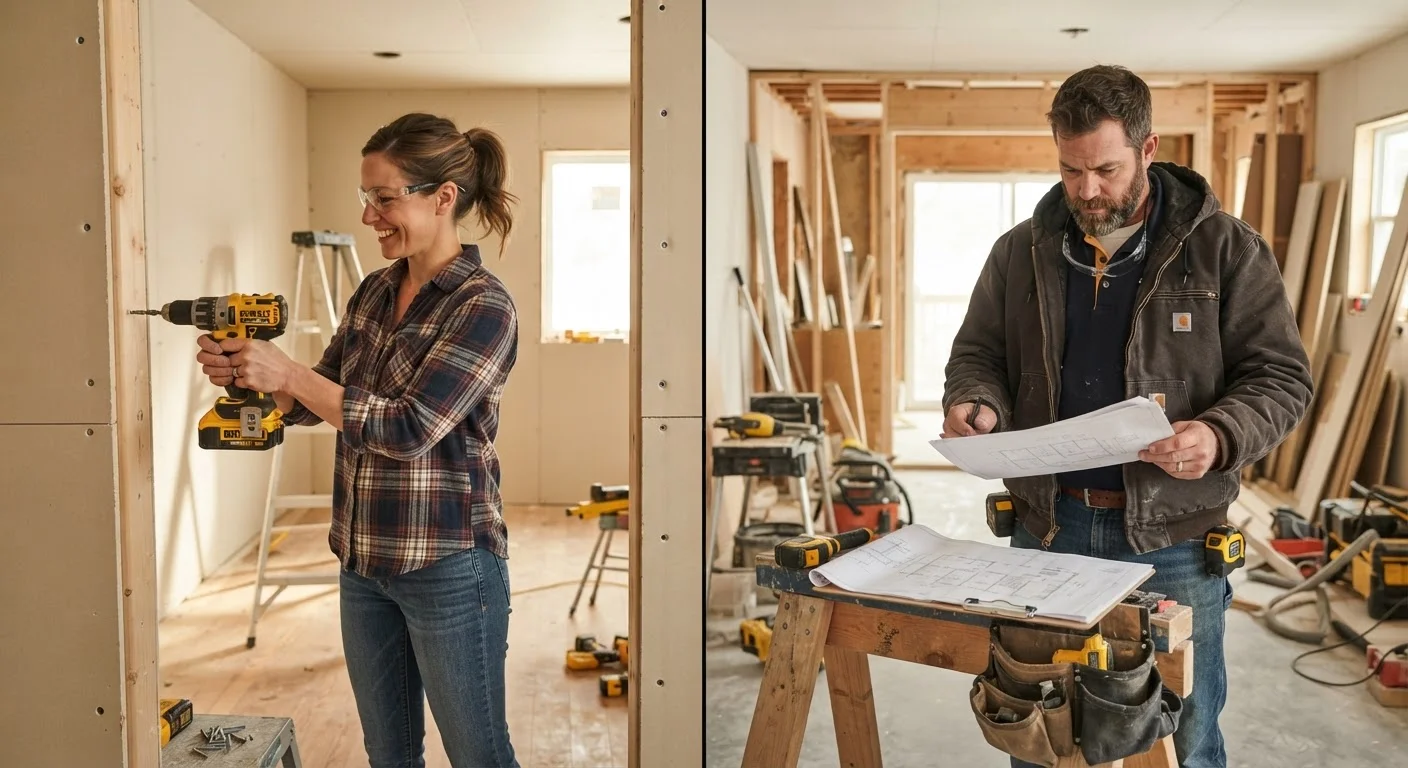
DIY always saves money compared to hiring a professional.
Fact
DIY can reduce labor costs on certain projects, but errors, required do-overs, and code violations can make amateur work more expensive than professional work in the end.
The savings from doing work yourself are real - but conditional. For straightforward cosmetic tasks like painting, installing shelving, or replacing hardware, a capable DIYer can genuinely cut costs. However, work involving plumbing, electrical systems, structural elements, or gas lines carries meaningful risk: mistakes can cause safety hazards, fail inspections, void homeowner's insurance coverage, or require licensed professionals to redo the work entirely. The cost of correcting a DIY error often exceeds what professional labor would have cost upfront. Honest self-assessment of your skill level - and an understanding of which tasks are regulated in your municipality - is essential before deciding to go it alone.
Myth
Skipping a permit saves time and money with no real downside.
Fact
Unpermitted work can create serious problems at resale, during insurance claims, and if discovered during future inspections - often costing far more to resolve than the permit would have.
Permits exist to protect homeowners, not inconvenience them. When work is done without required permits and is later discovered - by a home inspector during a sale, an insurance adjuster after a claim, or a building official during a neighbor complaint - the consequences can be significant. You may be required to open walls to expose unpermitted work for inspection, pay fines, or undo completed work. Some lenders and insurers may have concerns about homes with documented unpermitted additions. The short-term convenience of skipping the process rarely outweighs the long-term exposure it creates.
Myth
The most expensive materials will give you the best return on investment.
Fact
Material quality matters up to a point, but over-improving relative to your neighborhood typically yields diminishing returns at resale.
Buyers evaluate homes in context - they compare your home to similar properties in the same area. Installing premium marble countertops or custom cabinetry in a neighborhood where comparable homes sell with mid-range finishes means you're unlikely to recover that premium cost. This concept is sometimes called over-improvement, and it's a common trap. Mid-range, well-chosen materials that are installed cleanly and fit the home's overall style tend to perform better than luxury upgrades in the wrong context. Reserve high-end material choices for projects where the surrounding market supports them.
Myth
Open-plan renovations universally increase a home's appeal and value.
Fact
Open floor plans are popular but come with real trade-offs, and removing walls requires careful structural and practical evaluation before proceeding.
The appeal of open-concept living is genuine and well-documented in buyer surveys - but translating that preference into a smart renovation is more nuanced. Not every wall can or should be removed: some are load-bearing, meaning they carry structural weight and require an engineer's assessment and likely a beam installation before removal. Others may contain plumbing, HVAC ducts, or electrical runs that complicate or increase the cost of the project substantially. Beyond structure, open-plan living has real trade-offs - including reduced sound separation and limited wall space - that don't suit every household. Assess the full picture before committing.
Myth
Renovation projects usually come in on time and on budget if you plan carefully.
Fact
Cost and timeline overruns are common even in well-planned renovations; building in contingency buffers is standard professional practice, not pessimism.
Even experienced contractors and careful homeowners regularly encounter surprises: hidden water damage behind tiles, outdated wiring that doesn't meet current code, supply chain delays on materials, or subcontractor scheduling gaps. Industry professionals routinely recommend budgeting a contingency of 10-20% above your estimated project cost specifically to absorb these unexpected expenses without derailing the project. Similarly, adding buffer time to your expected completion date helps manage stress and avoids cascading problems if you've already scheduled things around a finish date that slips. Treating overruns as a realistic possibility - rather than a failure of planning - keeps you in a better decision-making position throughout the project.
Where Smart Renovation Decisions Begin
Good renovation planning starts with separating emotion from evidence. A project that excites you personally may or may not align with what adds functional value to your home or appeals to future buyers. That doesn't mean you shouldn't pursue it - but it does mean you should understand the trade-off clearly before committing.
Don't Assume Your Contractor Will Pull Permits
Some contractors - particularly those offering unusually low bids - may skip permit applications to save time or avoid scrutiny of their work. As the homeowner, you are ultimately responsible for ensuring permitted work is properly documented. Ask explicitly whether permits will be pulled, and verify with your local building department when in doubt.
Before starting any significant renovation, consult your local building department about permit requirements. Our guide to permits, inspections, and codes explains when approvals are required and what skipping them can cost you. For project-specific guidance, resources like a complete bathroom renovation guide can help you plan realistically from the start. And if you're tackling tile or detail work yourself, see what first-time DIYers get wrong about tile before you begin.
Renovation decisions also ripple into broader home ownership considerations. If you're evaluating whether improvements make sense given current market conditions, it's worth reading about common misconceptions about buying in a cooling market to understand how local conditions affect home value. Finally, renovation often surfaces clutter and organization challenges - myths about organizing shared spaces is a useful companion read once construction dust settles.